

Candy packaging is more than just wrapping - it protects the product, represents your brand, and influences buying decisions. Did you know 74% of consumers prioritize packaging design, and 39.4% make purchase decisions at the shelf? This guide covers everything you need to know about selecting materials, designing packaging, and ensuring quality to create professional, customer-ready candy packaging.
Key Points:
- Materials: Use options like aluminum foil for chocolates, PET for clarity and protection, or glass jars for gourmet candies.
- Design: Add decorative elements (e.g., ribbons, glossy finishes) and clear labels with product info, ingredients, and allergens.
- Tools: Heat sealers, capping machines, and labeling tools ensure airtight seals and polished presentation.
- Final Checks: Test seals, verify barrier performance, and inspect labels for compliance and clarity.
Packaging is your silent salesperson - get it right, and it can boost sales while building customer trust.
Everything You Need To Know About Candy Packaging
sbb-itb-529d1c3
Packaging Materials Checklist
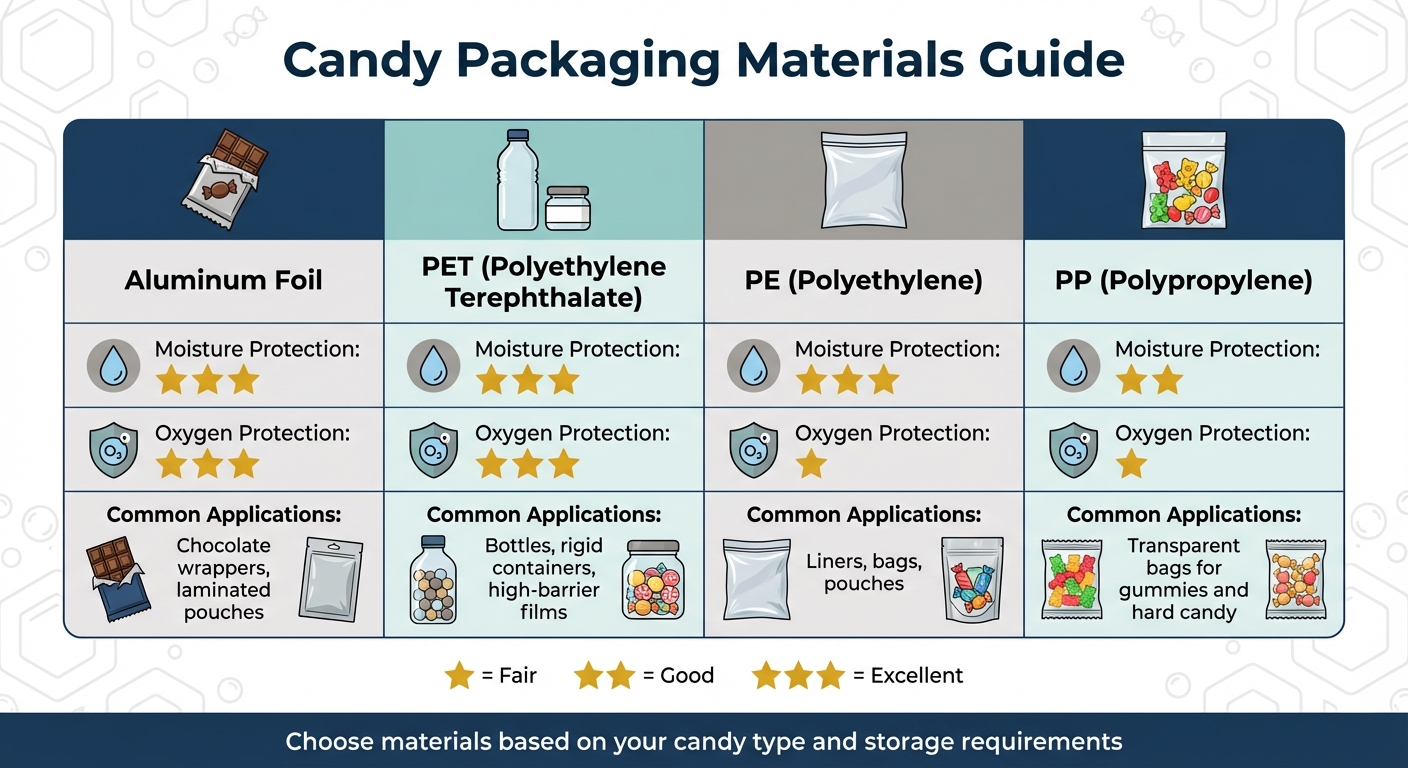
Candy Packaging Materials Comparison: Protection Levels and Applications
Selecting Packaging Materials
The right packaging materials are essential for maintaining candy quality. Moisture can make hard candies sticky, while oxygen and light can ruin the flavor and appearance of chocolates.
Aluminum foil is a top choice for chocolates and other light-sensitive candies, as it protects against moisture, oxygen, and light. For a clear option that still offers strong protection, Polyethylene Terephthalate (PET) is a great pick. It provides excellent clarity and blocks gases and odors. If you're packaging gummies or hard candies and want the product to be visible, Polypropylene (PP) is a reliable option for clear bags.
| Material | Moisture Protection | Oxygen Protection | Common Applications |
|---|---|---|---|
| Aluminum Foil | Excellent | Excellent | Chocolate wrappers, laminated pouches |
| PET | Excellent | Excellent | Bottles, rigid containers, high-barrier films |
| PE (Polyethylene) | Excellent | Fair | Liners, bags, pouches |
| PP (Polypropylene) | Good | Fair | Transparent bags for gummies and hard candy |
For gourmet candies, glass jars work well to preserve flavor and aroma while keeping out bacteria. If you need multi-layer protection, composite materials combining foil and plastic are a smart choice. Adding features like resealable zippers or press-locks to pouches can help keep candies fresh after opening.
While protection is crucial, packaging design also plays an important role in making your product stand out.
Decorative Elements
Decorative features can elevate your packaging from functional to unforgettable. Items like oversized paper bows or satin ribbons add elegance while securing boxes. Crinkle shreds and cupcake liners not only protect delicate candies but also add a splash of color and fun.
Clear windows in packaging allow the candy’s natural colors to shine through, drawing attention to the product itself. Finishes also make a big difference - glossy finishes create eye-catching shine, matte finishes convey sophistication, and soft-touch coatings offer a premium tactile feel. Even small touches like stick-on wood veneers or embossed foil patterns can create a striking three-dimensional effect.
Labels and Tags
Once you've chosen your materials and design, accurate labeling is the final step to ensure a polished, professional look. Labels not only enhance the aesthetic but also ensure compliance with safety regulations. Be sure to include:
- A clear, legal name for the candy (e.g., "Milk Chocolate Truffles").
- An ingredient list by weight, with allergens like peanuts, milk, and soy clearly highlighted.
- The net quantity (by weight or count), a Nutrition Facts table (if applicable), and your business contact information.
If you’re using terms like "chocolate", make sure your product meets the required standards for cocoa content. If not, use terms like "chocolaty coating" instead.
"They had taken a box on Valentine's Day to some girl, and she had kissed him … See's Candies means getting kissed. If we can get that in the minds of people, we can raise prices."
– Warren Buffett, Chairman and CEO, Berkshire Hathaway
For gift packaging, custom tags with metallic finishes or ribbons can add a touch of luxury. Including QR codes that link to your brand story, details about ingredient sourcing, or even recipes can help create a more interactive experience for your customers.
Every element - materials, decorations, and labels - works together to keep your candy fresh while showcasing your brand’s quality and personality.
For high-quality candy packaging supplies, check out Gloria's Cake & Candy Supplies, proudly serving Los Angeles, Culver City, and the Westside since 1972.
Tools Checklist for Assembly
Cutting and Sealing Tools
When it comes to creating airtight packages, heat sealers are a must-have. They use controlled heat to seal films or pouches, locking in freshness and keeping moisture away from your candies. For high-speed operations, consider VFFS machines, which can handle up to 440 bags per minute, or Doy Zip baggers for reclosable seals, with speeds of up to 100 bags per minute.
For precise cutting, cutting blades integrated into flow wrap and twist wrapping machines ensure clean separation of individual packs and trim away excess film. If you're working with bottles or jars, capping machines are essential for securing lids tightly to keep air out. For stand-up pouches with reclosable features, tools like zipper and tape applicators streamline the process and ensure consistency.
To maintain candy texture and freshness, calibrate your sealing equipment to expel air completely. Opt for tools with "washdown-duty" components and IP-rated motors, which allow thorough cleaning without damaging sensitive electrical parts.
Once your sealing and cutting tools are in place, focus on optimizing your workspace for efficiency.
Workspace Equipment
An organized workspace starts with conveyor systems, which transport candies through feeding, counting, sealing, and labeling stages seamlessly. This reduces manual handling, minimizes contamination risks, and keeps everything running smoothly. To prevent jams and ensure accurate counts, use vibratory feeders for a steady flow of product into your packaging line. At the end of the line, outfeed turntables collect finished packages neatly, avoiding bottlenecks.
For temperature-sensitive products like gummies, maintaining a temperature-controlled environment during packaging is essential to prevent sticking or melting. All equipment should be made from food-grade stainless steel (304 or 316) to ensure easy sanitization and resistance to corrosion. Clean contact surfaces daily with food-safe cleaners, and schedule monthly deep cleans for components like dies, nozzles, and sensors.
After streamlining your workspace, turn your attention to labeling tools for the finishing touches.
Labeling Tools
Label applicators are key to giving your packages a polished, professional look. These machines automatically apply branded labels, barcodes, and expiration dates to your products. Versatile options like the HERMA 500 can handle various configurations, including wrap-around, side, top-and-bottom, or closure labeling. For real-time printing of batch numbers and expiration dates, integrate thermal transfer printers into your labeling line.
For more specialized needs, tools like moving peel plates precisely apply decorative labels to delicate confectionery. Similarly, C-wrap labelers can place a single label across the bottom, front, and lid, doubling as a seal. To minimize downtime, choose labeling machines that allow quick, tool-free format changes for different product sizes.
Make sure your labels meet FDA standards by using text at least 1/16 inch tall and high-contrast colors like black on white. If your products are stored in refrigerated or frozen conditions, select adhesives designed to resist moisture or freezing temperatures.
Packaging Process Steps
Pre-Packaging Preparation
Start by cleaning and sanitizing all tools and workspaces to avoid contamination. Test your packaging materials to ensure they meet safety standards, checking for things like heavy metals or phthalates. Choose materials that suit the specific needs of your candy - solid candies need protection from moisture, while liquid-filled ones require barriers to prevent leaks. Prepare internal supports like base cards, inserts, and layer boards to keep your candies secure during transit.
Make sure your labels include all required details: product name, ingredients, nutritional information, allergens, and weight. If you're introducing a new packaging design or flavor, run small test batches to gauge consumer reactions and assess material performance before committing to large-scale production. For automated setups, organize your workspace to accommodate machinery like Flow Wrapping or VFFS systems for smoother operations.
Once everything is ready, you can move on to assembling your package with care and precision.
Assembling the Package
Use durable barrier films such as PET, BOPP, or aluminum foil to protect your candies, and consider adding resealable features like press-locks or zippers to maintain freshness. Flow wrapping is an excellent option for individually wrapping chocolates, bars, or gummies.
Arrange your candies in a way that looks visually appealing, especially if your packaging includes transparent sections to showcase the product. Add cushioning materials like cupcake liners or crinkle shreds to prevent movement during handling. Include practical features, such as tear notches, to make opening the package easy and user-friendly.
Once the package is assembled, focus on the finishing details to complete the presentation.
Finishing Touches
Apply labels and select finishes that align with your brand - glossy finishes can add vibrancy, while matte finishes offer a more refined look. For gift packaging, you can elevate the presentation by adding decorative touches like satin bows, fabric wraps, or elegant cords.
Think about adding functional elements like hang holes for retail displays or protective seals such as foil wraps or shrink bands to emphasize product freshness and safety. If you're using paper envelopes or boxes for homemade treats, line them with freezer paper to prevent grease stains on the exterior. These final touches not only protect your product but also enhance your brand's image.
If you're looking for high-quality packaging materials or professional advice, especially in the Los Angeles area, check out Gloria's Cake & Candy Supplies at gloriascakeandcandy.com.
Final Quality Checklist
Packaging Quality Verification
Before shipping, it’s crucial to ensure that every packaging element meets professional standards. Start by checking the seal integrity - airtight seals are essential to keep oxygen and moisture out. Without proper seals, gummies can turn sticky, and chocolates might develop fat bloom. Perform pressure and aging tests to confirm that seals will hold up during transit.
Evaluate the barrier performance of your packaging materials. Different candies require different levels of protection. For instance, heat-sensitive caramels need foil barriers, while chocolates demand shielding from light and oxygen. Also, ensure that labeling complies with all regulations. This includes verifying the presence of certification logos like FDA marks and recyclability symbols.
Test functional features such as resealable zippers, tear notches, and hang holes to confirm they work as intended. Additionally, review the aesthetic aspects of your packaging. Check for consistent color, sharp print resolution, and the desired finish - whether matte, glossy, or soft-touch. For premium products, inspect elements like raised imagery or textured finishes to ensure they align with your branding.
Here’s a quick comparison of common packaging types:
| Packaging Type | Protection Level | Pros | Cons |
|---|---|---|---|
| Pillow Bag | Moderate (Moisture/Oxygen) | Affordable, fast production | Limited shelf presence; non-standable |
| Stand-Up Pouch | High (Resealable) | Great shelf visibility; upscale feel | Higher cost than pillow bags |
| Flat Bottom Bag | Very High | Large branding area; very stable | Expensive production and materials |
| Metal Boxes | Superior (Impact/Light) | Luxurious and reusable | Heavy; highest cost |
| Glass Jars | Superior (Barrier) | Premium look; clear visibility | Fragile; heavy for shipping |
Once packaging quality is confirmed, proceed to a detailed final review.
Final Review
After completing earlier checks, conduct a thorough final inspection to ensure every detail aligns with your standards. Start with a visual inspection to spot any defects - look for tears in films, smudged prints, or seals that aren’t properly closed. Verify that critical details like lot codes and expiration dates are clearly printed and legible. Ensure that the product’s color, size, and shape meet specifications before sealing.
Check that the packaging is ready for shipping by ensuring items are securely packed to avoid damage during transit. Confirm that item numbers, product descriptions, and packing lists match the actual quantities. For retail-bound packages, assess "center-aisle" visibility, as these products are often viewed from a distance in larger retail settings. These final checks are essential to protect both your product and your brand’s reputation.
"Packaging is an essential component of any product as it not only protects the item during transit but also serves as a representation of the brand's quality and attention to detail." - Hayley Chesshir, Communications Specialist, Paramount Global
Conclusion
Having a thorough packaging checklist does more than just protect your product - it builds trust with your customers and reinforces your brand’s reputation. Every detail, from choosing the right barrier materials to ensuring seal integrity, plays a role in delivering candies that are fresh, appealing, and ready to impress.
Consider this: 74% of consumers say packaging design influences their purchasing decisions, and 39.4% of candy purchases happen right at the retail shelf. This means your packaging isn’t just a container - it’s a 24/7 salesperson, silently advocating for your product. These numbers highlight how critical it is to approach packaging with precision and care.
Proper packaging doesn’t just preserve freshness; it also demonstrates your dedication to customer satisfaction and adherence to regulations. Using eco-friendly materials or adding clear windows to showcase your product sends a message of transparency and reliability - qualities that can transform one-time buyers into loyal fans.
FAQs
What packaging material is best for my type of candy?
The best packaging material for your candy depends on its specific needs, like protection from moisture, impact, or the goal of extending shelf life. Flexible pouches are a great choice if you want to keep your candy fresh while also having room for creative and eye-catching designs. On the other hand, rigid boxes or tins provide better protection for more delicate candies that might need extra care. Think about what your candy requires to strike the right balance between protection and presentation.
How do I know my seals are truly airtight?
To make sure your seals are completely airtight, rely on proven testing methods such as pressure decay, vacuum decay, or leak detection tests. These approaches are designed to spot any weaknesses or leaks that might affect the quality of your product. While visual inspections can be helpful, they often fall short. Using the right equipment and testing techniques is key to confirming airtightness and protecting product integrity.
What label information is required for selling candy in the U.S.?
To sell candy in the U.S., labels need to display several key details. These include the product name, a complete list of ingredients, the net weight or quantity, and the producer or distributor's information. Additionally, allergen declarations must be clearly stated. All of this information should be easy to read, prominently displayed, and in compliance with FDA regulations. Accuracy is essential to meet legal requirements.
Shop Candy Packaging & Supplies
Candy bags, boxes, ribbons, and packaging supplies at Gloria's.
Shop at Gloria's11117 Washington Blvd, Culver City • Tue-Sat 10am-6pm • (323) 289-8807

