

Chocolate blooming happens when a dull, white coating forms on the surface of chocolate. This is not spoilage - it’s a structural change caused by fat or sugar crystals rising to the surface. While bloomed chocolate is safe to eat, its appearance, texture, and snap are affected. Here's a quick breakdown of what you need to know:
- Fat Bloom: Caused by temperature fluctuations or poor tempering; feels smooth and waxy.
- Sugar Bloom: Triggered by moisture or humidity; feels rough and grainy.
How to Fix It:
-
Melt the Chocolate: Heat it gently to the correct temperature:
- Dark: 115°F
- Milk: 108°F
- White: 104°F
-
Cool It Down: Use the seeding method to cool the chocolate to:
- Dark: 84°F
- Milk/White: 82°F
-
Re-Temper: Reheat to working temperatures:
- Dark: 88–91°F
- Milk/White: 85–87°F
- Alternative Use: If re-tempering feels complicated, use bloomed chocolate in recipes like brownies, ganache, or sauces.
How to Prevent Blooming:
- Store Properly: Keep chocolate at 60–68°F with less than 55% humidity.
- Avoid Temperature Swings: Keep chocolate away from heat or rapid cooling.
- Temper Correctly: Ensure cocoa butter crystals are stable during preparation.
Bloomed chocolate can be restored or repurposed, so don’t throw it away. For premium supplies or expert advice, visit Gloria's Cake & Candy Supplies if you're in the Los Angeles area.
Chocolate Bloom Explained: Should You Worry & How To Fix It
sbb-itb-529d1c3
Fat Bloom vs. Sugar Bloom: Understanding the Two Types
Knowing how to differentiate between fat bloom and sugar bloom is key to addressing the problem effectively. While they might look similar at first glance, their causes, textures, and visual cues are entirely different. Let’s break down how to identify each type.
What Fat Bloom Looks Like
Fat bloom shows up as a dull, grayish-white film with a cloudy, streaked surface. This happens when cocoa butter separates from the cocoa solids and rises to the surface, where it recrystallizes. The chocolate feels smooth, waxy, or even greasy to the touch. To confirm fat bloom, try the rub test: gently rub the affected area with your finger. If the coating melts and the chocolate underneath becomes shiny and dark again, it’s likely fat bloom. Common culprits include temperature swings, improper tempering, or long storage periods.
What Sugar Bloom Looks Like
Sugar bloom, on the other hand, appears as a rough, white, powdery or grainy layer. This occurs when moisture dissolves the sugar in the chocolate, and as the moisture evaporates, the sugar recrystallizes into larger particles. Unlike fat bloom, sugar bloom feels gritty and dry. The rub test won’t melt the coating - it stays rough and grainy. Sugar bloom often happens when refrigerated chocolate is exposed to warmer air, causing condensation. High humidity (above 55%) can also trigger sugar bloom since sugar naturally absorbs moisture from the air.
Fat Bloom vs. Sugar Bloom: Quick Comparison
| Feature | Fat Bloom | Sugar Bloom |
|---|---|---|
| Appearance | Dull, grayish-white, streaky film | Rough, white, grainy spots |
| Texture | Smooth, slick, waxy | Rough, sandy, gritty |
| Primary Cause | Temperature fluctuations, poor tempering | Moisture, humidity, condensation |
| Rub Test | Melts away with finger contact | Remains gritty and dry |
| Water Test | Water beads on the surface | Water dissolves the crystals |
| Heat Test | Disappears with gentle heating | Stays unchanged |
What Causes Chocolate Blooming
Knowing why chocolate blooms can help you avoid it altogether. That white coating on chocolate isn't mold or spoilage - it's a reaction to certain conditions that alter the chocolate's structure. Let’s break down the main culprits behind chocolate bloom.
Temperature Changes
Fluctuating temperatures are the leading cause of fat bloom. When chocolate is exposed to heat above its ideal range (60–68°F), the cocoa butter melts and separates from the cocoa solids. As the chocolate cools, the fat migrates to the surface and recrystallizes, forming a dull, grayish-white film. According to Wikipedia, "elevated and/or fluctuating temperatures increase the transformation rate and thus promote bloom formation".
Cocoa butter can crystallize into six different forms, depending on temperature (63°F–97°F). Even minor swings of just 2–3°F can trigger fat migration. Common situations that lead to this include moving chocolate from a cool basement to a warm kitchen, seasonal temperature shifts, or inadequate climate control during shipping.
Humidity and Moisture
High humidity is the main driver of sugar bloom. Sugar is hygroscopic, meaning it draws moisture from the air. When chocolate is exposed to a humid environment (above 55%) or condensation forms on its surface, that moisture dissolves the sugar. As the moisture evaporates, the sugar recrystallizes into a grainy, dusty layer.
Sugar bloom can appear in just a few hours after exposure to moisture. A common example is taking chocolate straight from the fridge into a warm room, causing condensation to form. Other triggers include kitchen steam, humid weather, or storing chocolate near water sources.
Poor Tempering
Tempering plays a key role in creating chocolate's glossy finish and satisfying snap. This process aligns cocoa butter crystals into a stable Form V structure. When chocolate isn’t tempered correctly during production, unstable crystals form instead. Over time, these unstable crystals transform into Form VI, which appears as fat bloom on the surface.
"Tempering is the process of carefully heating, cooling, and agitating chocolate so its fat crystals align in just the right way." - Anne Wolf, Professional Chef and Chocolatier
Without proper tempering, the cocoa butter lacks the right crystal structure, making bloom almost unavoidable over time.
Improper Storage
Storage issues often combine several bloom triggers. Refrigerators, for example, create a perfect storm of low temperatures and high humidity, leading to both fat and sugar bloom. Storing chocolate in areas above 70°F softens the cocoa butter, encouraging fat migration, while humidity above 55% invites sugar bloom.
If refrigeration is necessary, wrap the chocolate in an airtight container and let it warm up gradually before opening. This prevents condensation from forming on the cold surface. Ideally, chocolate should be kept in a cool, dark place with stable temperatures and low humidity, far from strong odors that it might absorb.
How to Fix Bloomed Chocolate
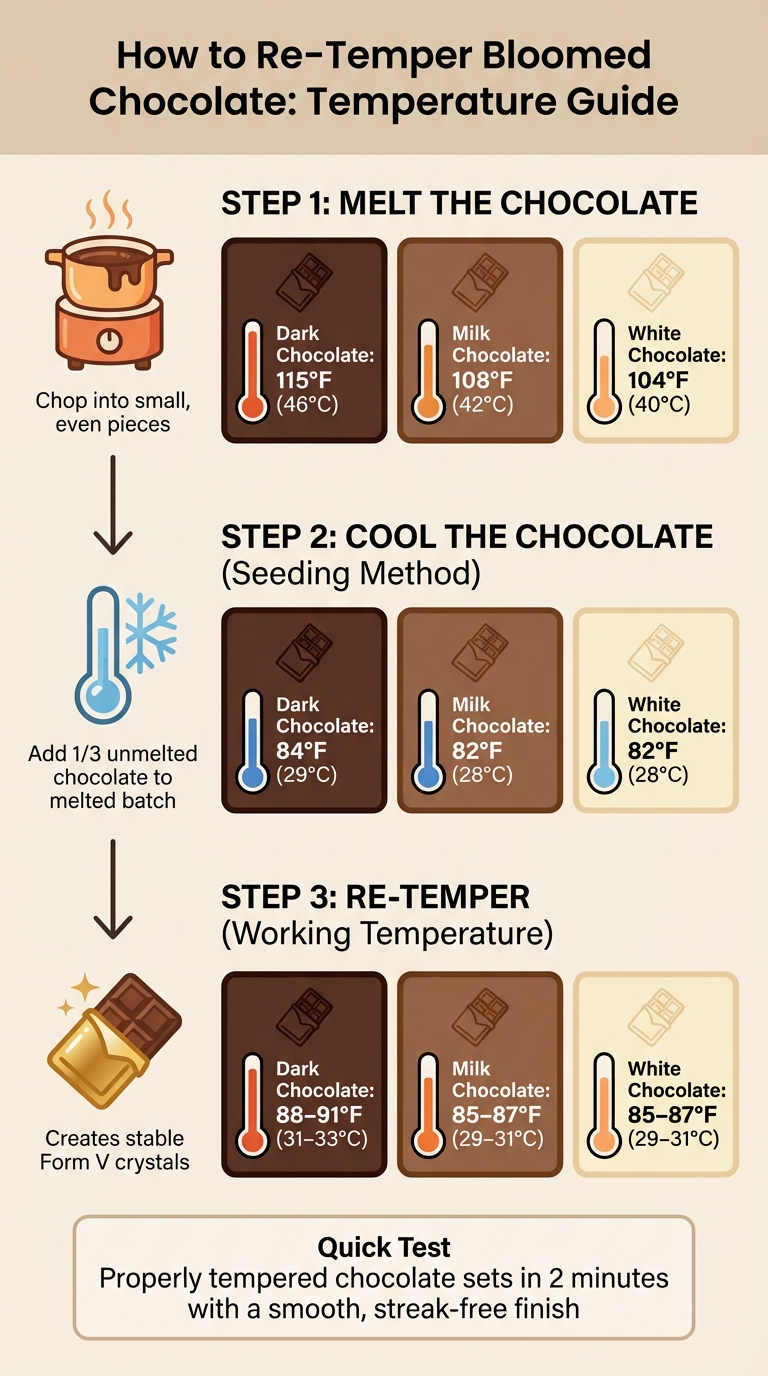
Complete Guide to Chocolate Tempering Temperatures for Dark, Milk, and White Chocolate
Bloomed chocolate might look unappealing, but it's perfectly safe to eat and can be restored to its original state by melting and re-tempering. The bloom is caused by a structural change in the chocolate, not a chemical one, so the process of melting and tempering eliminates the white film and restores its smooth texture and glossy appearance .
Step 1: Melt the Chocolate
Start by chopping the chocolate into small, even pieces to ensure it melts uniformly. Use a double boiler for gentle heating or a microwave in 20-second intervals, stirring in between. Be cautious - avoid introducing any water, as even a tiny drop can cause the chocolate to seize.
Heat the chocolate to the correct temperature for its type:
- Dark chocolate: 115°F
- Milk chocolate: 108°F
- White chocolate: 104°F
Use a kitchen thermometer to keep track of the temperature and prevent overheating.
Step 2: Cool the Chocolate
Once melted, it's time to cool the chocolate using the seeding method. Add one-third of unmelted chocolate to the melted batch and stir until the temperature drops to:
- 84°F for dark chocolate
- 82°F for milk and white chocolate
This step encourages the formation of stable cocoa butter crystals, which are essential for proper tempering.
Step 3: Re-Temper the Chocolate
After cooling, gently reheat the chocolate to its working temperature:
- Dark chocolate: 88–91°F
- Milk and white chocolate: 85–87°F
This process creates stable Form V cocoa butter crystals, which give the chocolate its signature shine, smooth texture, and satisfying snap.
"Tempering the melted chocolate creates a network of stable cocoa butter crystals... that gives chocolate a glossy finish, smooth mouthfeel and a satisfying snap." - Nancy Mock, Author
To check if the chocolate is properly tempered, spread a small amount on parchment paper or a plate. If it sets within two minutes with a smooth, streak-free finish, it’s ready to use.
| Chocolate Type | Melting Temp | Cooling Temp | Working Temp |
|---|---|---|---|
| Dark | 115°F (46°C) | 84°F (29°C) | 88–91°F (31–33°C) |
| Milk | 108°F (42°C) | 82°F (28°C) | 85–87°F (29–31°C) |
| White | 104°F (40°C) | 82°F (28°C) | 85–87°F (29–31°C) |
If re-tempering feels too complicated, no worries - there are simpler ways to use bloomed chocolate.
Step 4: Use Bloomed Chocolate in Other Ways
When looks don’t matter, bloomed chocolate can still shine in recipes. Use it in baked goods like brownies, cakes, or cookies, where it melts right into the batter. It’s also perfect for making ganache, hot chocolate, or chocolate sauces - any recipe where the chocolate blends with other ingredients.
However, sugar-bloomed chocolate might not work well for dipping or decorations, as the texture can be grainy. Instead, save it for recipes where smoothness isn’t critical.
For those in Los Angeles hunting for premium chocolate or baking supplies, check out Gloria's Cake & Candy Supplies. Serving Los Angeles, Culver City, and the Westside since 1972, they’re a go-to spot for bakers and chocolate enthusiasts alike.
How to Prevent Chocolate Blooming
Avoiding chocolate bloom requires addressing its main causes: improper tempering, temperature swings, and poor storage. These preventive steps work alongside the corrective measures already discussed.
Temper Chocolate Correctly
Getting the tempering process right is key to preventing bloom. When chocolate is tempered properly, the cocoa butter crystals align into a stable Form V structure, which gives chocolate its glossy appearance, crisp snap, and smooth melt.
"Form V is the structure that chocolatiers aim for when tempering because it produces a glossy finish, a crisp snap, and a smooth melt on the tongue." - Brett, Baker's Authority
Skipping proper tempering leads to unstable cocoa butter crystals, which causes bloom. One effective method is the seeding technique: melt 75% of your chocolate to the correct temperature, then add the remaining 25% as finely chopped pieces to introduce stable crystals . Use a reliable digital thermometer to monitor the melting, cooling, and rewarming steps . To check if your chocolate is properly tempered, dip a metal tool into it - if it sets firm and shiny within 3–5 minutes at around 65°F, you’ve nailed it .
While tempering is crucial, maintaining consistent storage conditions is just as important.
Store Chocolate Properly
Even the best-tempered chocolate can bloom if stored under poor conditions. Keep chocolate at a stable temperature between 60–68°F (16–20°C) with humidity levels below 55%. Use airtight containers and store them in a dark spot, away from sunlight, heat, or areas with fluctuating temperatures.
If room temperatures exceed 75°F, you might consider refrigeration, but take precautions. Wrap the chocolate tightly in plastic or foil, place it in an airtight container, and allow it to warm to room temperature (15–30 minutes) before unwrapping to avoid condensation. For those in humid areas, adding a food-safe silica gel packet to the storage container can help manage moisture levels.
Finally, the type of chocolate you use also plays a role in bloom prevention.
Choose Quality Chocolate Products
Opting for high-quality chocolate can make a big difference. Premium chocolate is made with pure cocoa butter, which is more stable compared to cheaper alternatives using vegetable oil substitutes.
"Quality chocolate with proper cocoa butter content resists bloom better than compound alternatives." - Zucchero Canada
When shopping, look for chocolate where cocoa butter is the primary fat, and steer clear of products with tropical oils or hydrogenated fats. Brands like Mercken's are designed for consistent tempering and viscosity, making them a reliable choice for both home bakers and professionals. For instance, Gloria's Cake & Candy Supplies in Los Angeles offers Mercken's chocolate wafers and other products that help reduce bloom. Their knowledgeable staff can assist in finding the perfect chocolate for your needs, whether you're baking at home or running a commercial kitchen.
Conclusion
Chocolate bloom might look unappealing, but it’s completely safe to eat and can be fixed. First, figure out if it’s fat bloom or sugar bloom. Then, gently melt the chocolate between 104°F and 115°F and re-temper it to bring back its glossy finish and satisfying snap. If re-tempering feels like too much effort, don’t worry - bloomed chocolate works perfectly in brownies, ganache, or any baked goods where appearance doesn’t matter as much.
To avoid bloom in the first place, focus on proper tempering, store chocolate in a stable environment (60°F–68°F with less than 55% humidity), and use high-quality chocolate. As Anne Wolf, a professional chef and chocolatier, explains:
"Bloomed chocolate doesn't mean it has gone bad - it's simply lost its temper".
For those looking for expert guidance or premium supplies, Gloria's Cake & Candy Supplies in Culver City has been a trusted resource for Los Angeles bakers since 1972. They offer products like Mercken's chocolate wafers, which are specially designed to temper consistently and perform reliably.
Whether you’re fixing bloomed chocolate or trying to prevent it in the future, having access to expert advice and dependable ingredients makes all the difference. Stop by Gloria's Cake & Candy Supplies at 11117 Washington Blvd. in Culver City (open Tuesday through Saturday, 10 AM–6 PM) or place an online order for same-day pickup. Their friendly, knowledgeable team is always ready to help you achieve flawless chocolate results.
FAQs
Does chocolate blooming change the taste or texture of the chocolate?
When chocolate blooms, it can affect both its flavor and texture. The once smooth and rich taste may become muted, and the texture can turn grainy or chalky. While this change might make the chocolate less visually appealing, it’s still completely safe to eat. In many cases, you can also re-temper the chocolate to bring back its original quality.
How can I store chocolate to prevent blooming?
To keep chocolate from blooming, store it in a cool, dry, and dark place. Aim for a temperature between 60-68°F and keep humidity levels below 50% to prevent sugar bloom. Use an airtight container to shield the chocolate from light, air, and odors, all of which can impact its quality.
By storing it properly, you preserve the chocolate's silky texture and shiny finish, helping it stay fresh and free of bloom for a longer time.
How can I check if my chocolate is properly tempered after fixing blooming?
To check if your chocolate is tempered correctly, pay attention to its appearance and texture. Properly tempered chocolate will have a shiny, smooth surface and produce a clean snap when broken. This happens because the cocoa butter crystals are perfectly aligned, creating that glossy finish and crisp texture.
Another easy way to test is by dipping a small piece of parchment paper into the chocolate. Chill it for 2–5 minutes. If the chocolate sets with a smooth, streak-free surface, you're good to go. These quick tests ensure your chocolate is ready for professional-level results!
Shop Chocolate Supplies at Gloria's
Merckens wafers, tempering tools, and chocolate molds — everything to fix and prevent blooming.
Shop at Gloria's11117 Washington Blvd, Culver City • Tue-Sat 10am-6pm • (323) 289-8807

