

High ratio shortening is a key ingredient for achieving smooth icings and moist cakes, but proper storage is essential to maintain its quality. Here’s what you need to know:
- Ideal Storage Temperature: Keep it between 50°F–70°F to prevent melting or hardening.
- Shelf Life: Unopened shortening lasts up to 8 months at room temperature. Once opened, use it within 3–6 months.
- Refrigeration: In warm climates, refrigerate to extend shelf life, but let it sit at room temperature for 30 minutes before use.
- Airtight Containers: Transfer opened shortening to airtight containers to avoid oxidation and odor absorption.
- Avoid Heat and Light: Store in a cool, dark place away from direct sunlight and heat sources.
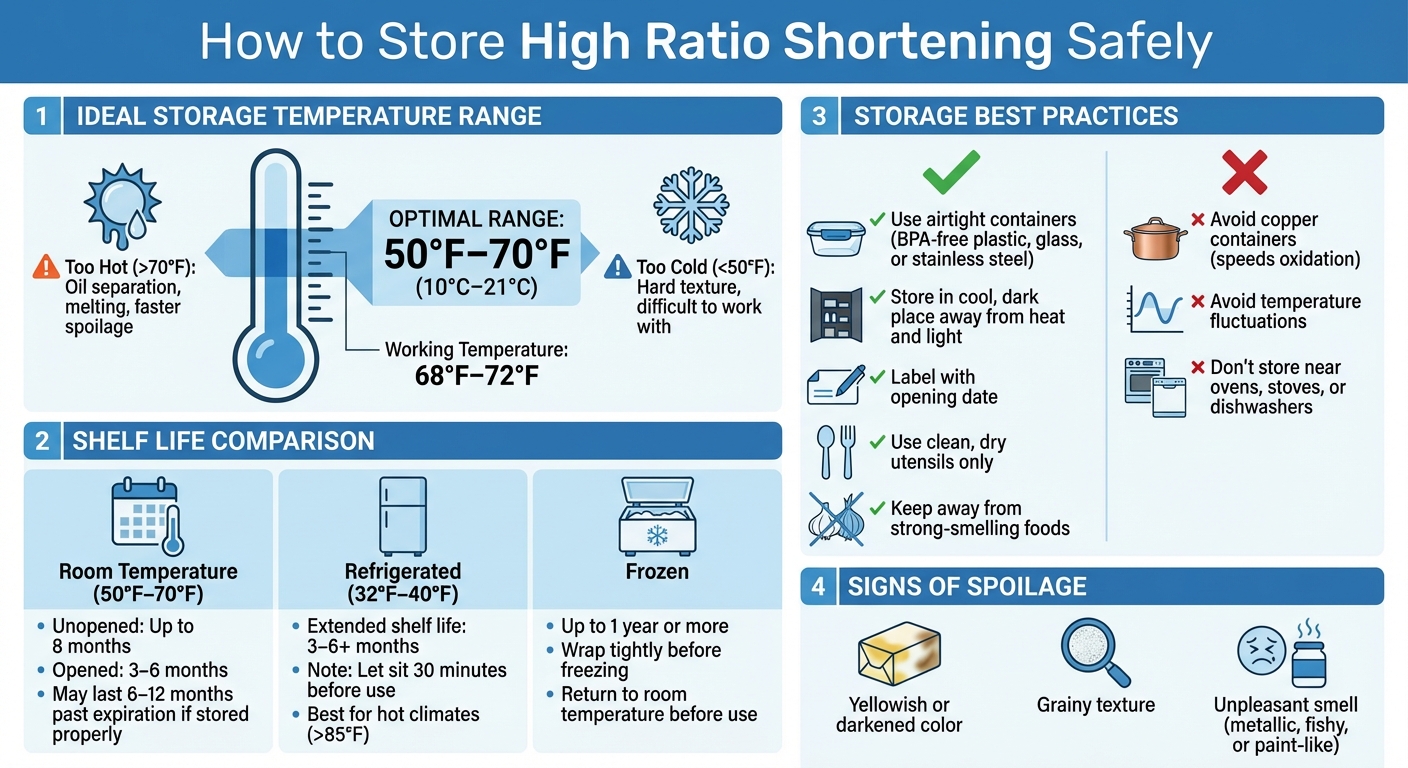
High Ratio Shortening Storage Guide: Temperature Ranges and Shelf Life
Best Temperature Range for Storage
For the best results, keep high-ratio shortening stored between 50°F and 70°F (10°C–21°C). This range prevents it from melting or becoming too firm. When you're ready to use it, let it warm slightly to 68°F to 72°F for optimal consistency . Proper temperature control is key to preserving both the texture and shelf life of shortening.
If the temperature goes too high, the fat melts, causing oil separation and breaking down the emulsified structure. This not only alters the texture but also speeds up spoilage. On the flip side, storing it too cold makes the shortening hard as a rock, making it difficult to work with.
Room Temperature vs. Refrigeration
How you store shortening depends largely on your kitchen's conditions.
- Room temperature storage: If you use shortening frequently, keeping it at room temperature in a cool, dry pantry or cabinet works well. Just make sure it’s far from heat sources to maintain its soft, spreadable texture.
- Refrigeration: In hot climates or kitchens that regularly exceed 70°F, refrigeration is a better option. It extends the shelf life to 3–6+ months. However, refrigeration does make the shortening firmer, so let it sit at room temperature for about 30 minutes before using it. Some bakers report a slightly grainy texture after refrigeration. If your area experiences temperatures above 85°F, refrigeration becomes a must to avoid rancidity. Always mark the container with the opening date to track its freshness.
Keeping Temperature Stable
Stability is just as important as the actual temperature when it comes to storing shortening. Avoid locations near ovens, stoves, or dishwashers, as these areas experience constant temperature swings. Such fluctuations can cause the shortening to repeatedly melt and solidify, which accelerates oxidation, breakdown, and the development of off-flavors.
"Consistent temperature control helps maintain shortening's texture and flavor." - The Kitchen Community
Pick a storage spot that stays consistently within the 50°F–70°F range. A pantry shelf away from heat or a dedicated baking supplies cabinet is ideal. If you’re refrigerating, store the container in the main compartment rather than the door, where frequent temperature changes occur. This helps protect the shortening’s emulsified structure and ensures it stays in top condition.
sbb-itb-529d1c3
Choosing the Right Containers and Packaging
Once you've got temperature control sorted, the next step to keeping high ratio shortening in top shape is choosing the right packaging. The container you use plays a big role in maintaining freshness and preventing spoilage. Once the original packaging is opened, the shortening becomes exposed to air, moisture, and even odors from other nearby items. If the original box or tub doesn’t reseal tightly, it’s time to move the shortening into an airtight container to protect it .
Using Airtight Containers
Airtight containers are a must when storing high ratio shortening. These containers keep oxygen out, which helps prevent oxidation and rancidity. They also stop the shortening from picking up strong odors from spices or other pantry staples. Since shortening is pure fat and contains no moisture, it won’t grow mold, but it’s still susceptible to absorbing unwanted smells if left unsealed.
As you use up your shortening, consider transferring the leftovers into a smaller container. This reduces the amount of air in contact with the shortening, slowing down oxidation. The material of the container also matters when it comes to protecting the shortening’s quality.
Safe Container Materials
When it comes to materials, stick with BPA-free plastic, glass, or stainless steel, as these won’t react with the shortening . For larger quantities, stainless steel is the go-to choice. If you’re using mild steel tanks, make sure they’re coated with a food-safe material like phenolic epoxy resin.
Avoid using copper or copper alloys such as brass or bronze, as these can speed up oxidation and cause the shortening to go rancid faster. Opaque containers are particularly useful because they block out light, which can degrade the quality over time . If you’re using glass containers, store them in a dark place like a pantry or cabinet to keep them away from direct sunlight.
"Metal cans are the most resistant to long-term oxygen transfer." - Utah State University Extension
For freezer storage, wrap the shortening tightly in plastic wrap before placing it in a freezer-safe airtight container. This extra step removes air pockets and helps prevent freezer burn .
How Long High Ratio Shortening Lasts
Knowing how long high ratio shortening stays fresh is just as important as storing it properly. By managing temperature and using the right containers, you can ensure your shortening lasts as long as possible.
Shelf Life at Room Temperature
If unopened and stored between 50°F and 70°F, high ratio shortening can last up to 8 months. In some cases, it may even remain usable for 6 to 12 months past its printed expiration date if conditions are ideal. Once opened, it’s best to use it within 3 to 6 months to maintain peak quality. Thanks to its 100% fat and zero-moisture composition, it naturally resists bacterial growth. However, oxidation can cause spoilage, turning the fat rancid. Signs of this include a yellowish or darkened color, a grainy texture, or an unpleasant smell resembling metal, fish, or paint.
"At room temperature, unopened solid shortening can be kept for up to eight months, and once opened, it should be used within three months for best quality."
– The Kitchen Community
To keep track of freshness, mark the container with the date you first opened it. Always use clean, dry utensils to avoid introducing moisture or crumbs, which can speed up spoilage. If your kitchen tends to get warm or you don’t use shortening frequently, refrigeration might be a better option.
Shelf Life When Refrigerated
Though refrigeration isn’t necessary, it can extend the life of your shortening beyond what’s possible at room temperature. This is particularly helpful in warmer climates or for occasional bakers. The ideal refrigerator temperature for storing shortening is between 32°F and 40°F.
Keep in mind, refrigerated shortening will harden, so you’ll need to let it sit at room temperature for about 30 minutes before using it to soften. For even longer storage, you can freeze shortening for up to 1 year.
If you’re getting your high ratio shortening from Gloria's Cake & Candy Supplies, following these storage tips will help ensure it stays fresh and ready for all your baking needs.
Avoiding Common Storage Problems
Even with the right temperature and container choices, small missteps in storage can shorten the life of your shortening. By recognizing and addressing these issues, you can make sure every container lasts as long as possible.
Keeping Shortening Clean
Contamination is a common but preventable issue. Once opened, shortening can easily be exposed to dust, food particles, or moisture, all of which can compromise its quality. Always use clean, dry utensils to avoid introducing moisture or bacteria.
Shortening also has a knack for soaking up odors. To keep it fresh, avoid storing it near strong-smelling items like onions, garlic, or fish. For added protection, consider using separate containers for different purposes, such as frying versus baking supplies.
"Fryers should always be dedicated to using one type of shortening if opportunities to generate off odors and flavors are to be minimized."
– Michael D. Erickson
Next, let’s tackle oxidation, another key factor in preserving shortening quality.
Preventing Oxidation and Rancidity
Oxidation is a major culprit behind rancidity, and it’s triggered by exposure to air and light. When shortening comes into contact with oxygen, it undergoes a chemical process called auto-oxidation, which degrades its quality. Light, especially UV rays, speeds this up even more through light-induced oxidation.
To combat this, store your shortening in airtight, opaque containers to block both air and light. Keep these containers in a cool, dark place, away from heat sources like stoves or windows. Heat accelerates the formation of free radicals, which further drive oxidation. Even small gaps in seals can make a difference, so always double-check that lids are tightly closed after use.
Finally, managing your stock effectively ensures you’re always using shortening at its freshest.
Labeling and Using Older Stock First
Label each container with the date it was opened. This simple step helps you keep track of freshness and implement a First-In, First-Out (FIFO) system. Place newly purchased shortening behind older containers, and if you’re buying in bulk, arrange your storage so the oldest containers are the easiest to grab. This way, you’ll always use your stock in the right order.
Conclusion
Storing high ratio shortening is simple: just keep it in a cool, dark place and use airtight containers. Aim for a temperature range of 50°F to 70°F (10°C to 21°C) and make sure it’s sealed tightly to protect it from air, light, and odors. Always use clean, dry utensils when handling it, and don’t forget to label containers with their opening dates.
"Proper storage of shortening is essential to maintain its quality and extend its shelf life."
– The Kitchen Community
Unopened shortening can last up to 8 months at room temperature, but once opened, it’s best to use it within 3 months for optimal quality. Need it to last longer? Freezing can extend its shelf life to a year or more. Just let it return to room temperature before using. Following these steps will ensure your shortening stays fresh and ready to deliver great results in your baking.
FAQs
Can I still use shortening past the expiration date?
Shortening can sometimes be used past its expiration date, but only if it shows no signs of spoilage. Before using, check for a rancid smell, unusual color changes, or an off texture. If you notice any of these issues, it’s best to throw it out to keep your baked goods safe and high-quality.
How do I fix shortening that got too hard or melted?
If shortening is too firm, let it soften naturally at room temperature. If it has melted, let it cool and solidify either at room temperature or in the refrigerator until it achieves the desired consistency. Avoid overheating, as this can change its characteristics. To prevent these problems, store shortening in an airtight container and maintain a consistent temperature.
What’s the best way to store shortening in a small kitchen?
To store shortening in a small kitchen, keep it at room temperature (59°F to 77°F) in a tightly sealed container. This helps protect it from air and odors. If you want to extend its shelf life, freezing it at 0°F is a good option. Make sure to store it in a cool, dark spot, away from heat and strong smells, to preserve its quality without using too much space.
Shop Baking Essentials
High ratio shortening, meringue powder, and baking supplies — on the shelf at Gloria's.
Shop at Gloria's11117 Washington Blvd, Culver City • Tue-Sat 10am-6pm • (323) 289-8807

