

Summer desserts often face challenges like melting frosting, drooping decorations, and food safety concerns when temperatures rise above 90°F. This guide focuses on practical solutions to keep your treats stable and visually appealing for outdoor events. Key tips include:
- Buttercream Stability: Use high-ratio shortening to create heat-resistant buttercream that holds its shape up to 115°F.
- Chocolate Options: Choose Mercken's confectionery wafers for decorations that don’t require tempering and are less prone to melting.
- Fondant Durability: Strengthen fondant with additives like Tylose powder for firmer shapes that resist heat.
- Transport and Storage: Freeze desserts before transport, use insulated coolers, and display treats in shaded areas to maintain freshness.
- Flavor Pairings: Opt for citrus and tropical flavors, which stay light and refreshing in the heat.
Buttercream Melting? Try These Hot Weather Cake Decorating Tips!
sbb-itb-529d1c3
High Ratio Shortening for Heat-Stable Buttercream
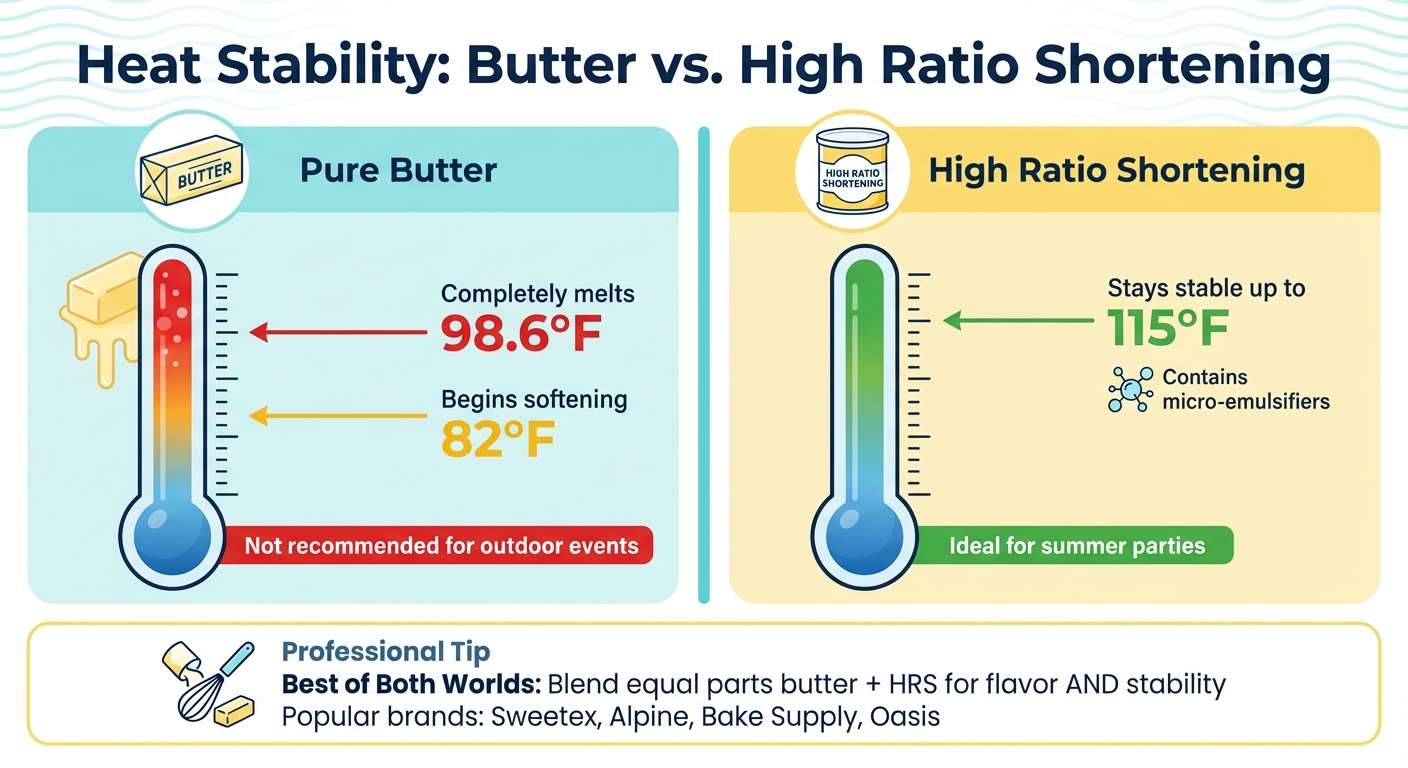
Heat Stability Comparison: Butter vs High Ratio Shortening for Summer Desserts
High ratio shortening (HRS) is a game-changer for desserts that need to withstand summer heat. Unlike standard shortening brands like Crisco, HRS contains micro-emulsifiers that allow buttercream to hold more sugar and liquid without breaking down. This is especially important when temperatures soar. While pure butter begins to soften at 82°F and melts entirely at around 98.6°F, high ratio shortening stays stable up to about 115°F.
"High ratio shortening does not leave a greasy film aftertaste. Whenever possible, use high ratio shortening rather than Crisco." - Catherine Baez Sholl, Baker and Author, The Fit and Healthy Baker
To achieve the perfect balance of flavor and heat resistance, professional bakers often blend equal parts butter and HRS. Popular brands for HRS include Sweetex, Alpine, Bake Supply, and Oasis. This type of shortening produces a smoother, fluffier buttercream without the greasy texture that can come with traditional shortening. It’s perfect for spreading, piping, and holding its shape even in warm conditions.
Heat-Stable Buttercream Recipe
This buttercream recipe is designed to handle high temperatures, making it ideal for summer events. The use of high ratio shortening ensures stability, while meringue powder adds extra resistance to humidity. A touch of salt balances the sweetness for a more refined flavor.
Start by beating 2 cups (386g) of high ratio shortening with 2 tablespoons of clear vanilla extract until smooth. The clear vanilla keeps your frosting bright white, which is perfect for creating vibrant, colorful decorations. To cut through the sweetness, add 1/2 to 1 teaspoon of fine-grain popcorn salt, or dissolve regular salt in your liquid before mixing.
Next, gradually add 4 lbs (1,820g) of confectioners' sugar, alternating with 1 cup (238g) of milk or heavy cream. Beat the mixture for about 8 minutes until it’s creamy and smooth. For added heat resistance, mix in 1 tablespoon of meringue powder during the sugar incorporation stage. In the final 2 to 3 minutes, reduce the mixer speed to eliminate air bubbles, ensuring a silky finish. If you’re dealing with humid weather, add 2 tablespoons of cornstarch for every 3 cups of icing to absorb excess moisture and prevent weeping.
This recipe has been highly rated, earning a 4.88 out of 5 from 16 votes on Sugar & Sparrow. Bakers have praised its performance, with reports of it holding up beautifully at outdoor weddings, even in September heat, where it kept sugar pearls firmly in place.
Once your buttercream is ready, it’s time to bring your pool party theme to life with creative piping techniques.
Piping Techniques for Pool Party Themes
With your heat-stable buttercream prepped, you can create stunning decorations that match your pool party vibe.
- For wave patterns, use a petal tip or a large open star tip with blue-tinted buttercream. Make overlapping "C" motions to replicate the look of rippling water.
- To design beach balls, pipe round white mounds as the base. Then, use thin strips of fruit leather or colored gel icing to create colorful, segmented patterns.
- For flip-flop decorations, pipe two elongated oval shapes side-by-side. Add "V"-shaped straps in a contrasting color using a small round tip.
One of the standout features of this buttercream is its natural crusting ability, which forms a thin, firm outer layer. This crust helps protect your designs from drooping, even in humid conditions. It’s an excellent choice for decorations that need to travel or sit outdoors for extended periods, ensuring your creations stay beautiful and party-ready.
Mercken's Chocolate Wafers for Outdoor Treats
Mercken's Rainbow™ confectionery wafers are an excellent choice for summer decorating. Unlike traditional chocolate, these wafers are made with vegetable fats like palm kernel oil instead of cocoa butter. This means they don’t require tempering, making them easier to work with. While they’re more stable than real chocolate for tasks like molding and piping, they still need careful handling to perform well in outdoor conditions.
To prepare Mercken's Rainbow™ wafers, heat them to 115°F–120°F in a microwave-safe plastic or silicone bowl. Use short bursts of 15–30 seconds at 50% power, stirring between each interval. Once melted, let the wafers cool to 98°F–102°F before working with them. Make sure all your tools are completely dry - any moisture can cause the oil-based wafers to seize, ruining their consistency.
"The recommended working temperature for the Merckens® confectionery wafers is about 102°F. Always stay above 98°F and DO NOT EXCEED 120°F." - Royal Wholesale Candy
Once your decorations are molded, cooling them properly is key to achieving a glossy finish. Instead of leaving them at room temperature, place them in a space between 45°F and 65°F to encourage proper crystallization. While a quick chill in the refrigerator can help speed things up, avoid leaving them there too long to prevent condensation or "sweating" when they’re exposed to outdoor temperatures. Store your creations in a cool, dark place until it’s time to serve.
Molded Chocolate Decorations
After your melted wafer mixture reaches the ideal working temperature, pour it into silicone or plastic molds shaped like sunglasses, beach umbrellas, or pool floats to match your party theme. You can mix different colors from the Rainbow line or add oil-based candy colorings to create custom summer shades. Once the molds are filled, let them set in a cool area to ensure a glossy finish and a firm texture.
Store your finished decorations in a space between 65°F and 68°F with a humidity level below 50%. Because the wafers can absorb odors from their surroundings, keep them away from strong-smelling items like onions or cleaning supplies. At your event, serve the treats in small batches rather than leaving a full tray out in the heat. This helps maintain their sharp appearance and prevents melting.
Once you’ve mastered molded decorations, you can also enhance your desserts with a heat-resistant ganache.
Heat-Stable Ganache Recipe
For a ganache that holds up in warm weather, heat 1 cup of heavy cream to 190°F, then pour it over 2 cups of Mercken's chocolate wafers. Let it sit for 2 minutes before stirring until smooth and glossy. This ganache sets firmer than traditional versions, making it more resistant to summer temperatures.
Use this ganache as a filling for cakes or as a topping for cupcakes, knowing it will stay stable outdoors better than butter-based frostings. For best results, chill the ganache to around 65°F before spreading or piping. Keep finished desserts in a shaded area until serving. If you notice white splotches (bloom) caused by temperature changes, don’t worry - the taste remains just as delicious, even if the appearance is slightly affected.
Fondant Decorating for Summer Pool Parties
Fondant is a great choice for summer cakes because it handles heat better than buttercream. Its lower fat content and gelatin stabilization form a protective shell that resists melting and sliding.
"In terms of holding up to the heat, fondant, which is lower in fat and stabilized by the gelatin which is often an ingredient, tends to hold up the best." - Craftsy
To make fondant decorations even sturdier, you can mix in Tylose powder or Gum-Tex. These additives help decorations dry harder, which is especially useful for vertical designs like pool slides or standing figures. For best results, prepare your decorations at least two days in advance so they have enough time to set completely.
When it comes to coloring fondant for summer themes, gel-based food colors are your best bet. These provide bold, vibrant colors without making the fondant overly soft or sticky. If you're aiming for deep shades, mix the gel color into melted marshmallows before adding powdered sugar - this ensures rich tones without compromising the fondant's texture.
For rolling out fondant, use cornstarch instead of powdered sugar. Cornstarch prevents sticking and doesn’t dissolve into the fondant as quickly as powdered sugar does. To avoid softening the fondant with your hands, run cold water over them before handling.
Pool-Themed Fondant Designs
For a summer vibe, try creating beach balls by rolling out strips of colored fondant and arranging them in a circular pattern. Use a circle cutter for the white cap on top to hide the seams. To make pool floats, shape thick fondant rings and add Tylose powder to keep them firm in the heat.
To mimic water ripples, layer different shades of blue fondant or use a smoother to create wavy edges. Work quickly to avoid the heat affecting the fondant's texture. For smaller accessories like sunglasses or flip-flops, mold them from colored fondant and let them dry for 48 hours to ensure they stay rigid.
If you're crafting pool slides, use thick strips of fondant or gum paste for stability. Support vertical decorations with hidden dowels or pretzel sticks until they’re fully dry. Avoid delicate designs like thin tendrils or intricate flowers, as they’re more likely to droop in outdoor conditions. Stick with sturdier shapes that can handle heat and humidity.
When using molds for detailed shapes like shells or starfish, place the filled mold in the freezer for 10 minutes. This makes it easier to remove the fondant without distorting the design. For decorations that need to curve around a cake, wrap them individually in Press‑n‑Seal to keep them pliable until you’re ready to apply them.
Transporting and Storing Fondant Creations
Once your fondant decorations are complete, proper storage and transport are key to keeping them intact. Fondant is sensitive to moisture, which can cause craters or shiny patches by dissolving the sugar.
"Water + fondant = disaster. The water begins to dissolves the sugar in the fondant, which can create small craters or shiny patches in your icing." - Craftsy
Store finished decorations at room temperature in airtight containers. Avoid the refrigerator or freezer, as temperature changes can cause condensation and air bubbles to form when the fondant warms up. Wrap fondant tightly in plastic wrap, seal it in a zip-top bag, and place small pieces in unused cake boxes to protect them from light and impact. During setup, keep everything in the shade since intense sunlight can fade colors, especially purples, reds, blacks, and blues.
If cracks appear on your fondant due to heat or dryness, gently rub a small amount of solid vegetable shortening over the area. This smooths the surface without adding moisture, which could cause more damage. Shortening is a better option than butter or coconut oil in summer because it has a higher melting point and doesn’t require refrigeration.
Lastly, follow the two-hour rule for food safety. Fondant-decorated treats shouldn’t stay unrefrigerated for more than two hours - or just one hour if it’s over 90°F. Bacteria can double in just 20 minutes when food is kept between 40°F and 140°F. Keep cakes chilled until the last moment, and display them in shaded areas with minimal sun exposure.
Transporting and Setting Up Treats at Outdoor Events
When taking your treats to outdoor events, careful transport is key to avoiding melting or damage. Pairing smart transport methods with heat-resistant decorating techniques ensures your creations stay picture-perfect. Stick to USDA food safety guidelines: keep cold food below 40°F and never leave it unrefrigerated for more than two hours - or just one hour if the temperature soars above 90°F. Bacteria multiply rapidly in the "danger zone" between 40°F and 140°F, doubling every 20 minutes. Use these simple strategies to keep your treats in top shape from your kitchen to the event.
Insulated Transport Solutions
Freezing your treats before transport can significantly slow melting. For example, fully freeze cupcakes ahead of time and pack popsicles in an insulated tumbler with ice cubes to keep them frozen for up to 4 hours. Another trick? Create a frozen base by filling an aluminum foil tray three-quarters full of water, freezing it overnight, and placing a second tray with your treats on top. Pre-portion cupcakes in muffin tins with liners for easy serving, and always keep a thermometer in your cooler to monitor the temperature. Keep the cooler shut as much as possible to maintain the cold.
"Always keep the cooler in the shade, [and] keep a thermometer in the cooler [to] monitor the temperature throughout the cookout." - Frank Proto, Chef and Director of Culinary Operations at the Institute of Culinary Education
Once your treats arrive safely, proper setup at the event is just as important.
Shading and Setup Strategies
Set up your dessert table in a shaded area as soon as you arrive. Pop-up canopies or adjustable patio umbrellas are excellent tools to create a shaded space for your treats. If you're planning a semi-permanent setup, rectangular shade sails can offer even better coverage.
To keep your desserts fresh while serving, bring them out in smaller batches rather than displaying everything at once. Store extras in an indoor refrigerator or a high-quality cooler, and swap them out with fresh portions as needed. For added cold protection, nest serving bowls in larger bowls filled with ice. Another handy tip: pre-chill your serving plates and bowls in the freezer before use to help keep your treats cool longer.
"The best way to keep cold food cold in extremely hot weather is [to keep this food] in an indoor section." - Todd Annis, Vice President of Culinary Operations at Cru Catering
Summer Flavor Combinations
When the weather heats up, it's important to choose flavors that can handle the temperature without losing their appeal. Citrus-based desserts and tropical pairings are perfect for delivering refreshing tastes that stand up to the summer sun. Adding glazes or heat-resistant buttercream can also help keep your treats stable.
Citrus and Fruit-Based Fillings
Lemon desserts are a go-to for outdoor gatherings because their glazes are less likely to melt. Take lemon cookie bars, for example - they combine the best of sugar cookies and lemon bars, featuring a light glaze made from confectioners' sugar and lemon juice. This glaze adds a sweet-tart finish and avoids the instability of buttercream. Ingredients like buttermilk and citrus juices bring tanginess to your desserts, balancing the sweetness and keeping flavors fresh even in the heat.
For fillings, fruit preserves and concentrates are a better choice than fresh fruit slices. They deliver bold flavors without adding too much moisture. Pairings like raspberry and lemon offer a high-acid balance for glazes, while strawberry and watermelon work beautifully in cupcakes or sheet cakes. For layered desserts, fruit curds or lemonade concentrate provide intense flavor without compromising the structure.
Tropical flavors can also take chocolate-based desserts to a new level, especially for summer events.
Chocolate and Tropical Flavor Pairings
Tropical ingredients like pineapple, coconut, and mango bring a touch of island flair and complement the richness of chocolate. When paired correctly, these flavors can transform your summer treats. For example, cake pops made with angel food cake provide a light base that pairs well with coconut-rum flavoring. This lighter texture is more appealing in the heat than a dense chocolate cake.
Toasted coconut is another great addition. It adds a crunchy texture to chocolate-covered treats and holds up better in humid conditions than softer toppings. For a Piña Colada-inspired dessert, combine pineapple and coconut in pull-apart cupcakes. This setup allows guests to grab individual portions without the hassle of slicing a cake outdoors. You can also use pineapple juice or citrus-marinated fruit to cut through the richness of chocolate, keeping desserts light and refreshing even in high temperatures. Serving chocolate items in individual liners not only catches drips but also keeps the presentation neat and tidy.
These flavor combinations are not just delicious - they’re also practical for summer parties, ensuring your desserts stay enjoyable even under the sun.
Conclusion
When it comes to summer pool parties, choosing heat-stable decorating techniques is a must. Materials like high-ratio shortening, Mercken's chocolate wafers, and fondant strengthened with Tylose powder can handle temperatures soaring past 90°F without losing their shape.
These materials not only hold up well but also make the decorating process easier. For example, using shortening as the base for buttercream helps it stay stable at room temperature. You can prepare chocolate details ahead of time with silicone molds and store them in a cool, dry spot to prevent condensation. And when rolling out fondant, swapping powdered sugar for cornstarch gives a cleaner, smoother finish.
"Making and using your own fondant takes practice, patience and perseverance. But doing it yourself will save you money, won't add much time, and it will taste better than any store bought fondant out there." - Chels, Author and Baker, Sugared Sentiments
Timing and storage are equally important. Set up your treats as close to party time as possible, and use shaded areas like umbrellas or gazebos to protect them. Running fans can also help improve air circulation and keep things cool. By combining these techniques with proper storage and handling, your summer treats will stay stunning and safe to enjoy.
With these tips, your poolside creations will shine all season long.
FAQs
How can I make buttercream frosting that holds up in hot summer weather?
To keep your buttercream frosting from wilting under the summer heat, a few tweaks can make all the difference. Start by swapping out 1/4 to 1/2 of the butter with high-ratio shortening - this makes the frosting more heat-resistant, even in temperatures up to 90°F. Want it even sturdier? Add about 1 cup of powdered sugar for every cup of butter or shortening. This thickens the frosting and helps prevent it from melting. For an extra touch of firmness, mix in 2 tablespoons of cornstarch or 1 teaspoon of instant clearjel for every 2 cups of frosting. A teaspoon of meringue powder can also work wonders in keeping everything in place.
Once your frosting is ready, chill it in the fridge for about 30 minutes before using it. When transporting your decorated cake, use an insulated bag or cooler to keep it cool. At the party, set the cake in a shaded spot or use a chilled cake stand to help it hold its shape. These simple adjustments will keep your buttercream looking smooth and flawless, even on the hottest summer days!
What types of chocolate are best for outdoor events to avoid melting in the heat?
When planning outdoor events, tempered dark chocolate or pre-tempered coating wafers are smart picks since they’re less likely to melt in warm weather. To maintain their texture and flavor, keep the chocolate in a cool, dry, and shaded spot until it’s time to serve. This way, your treats will look appealing and taste great, even under the summer sun.
How can I keep fondant decorations firm in hot weather for a pool party?
To keep your fondant decorations intact in high temperatures, it’s all about stabilizing the fondant and shielding it from heat and humidity. Start by kneading in 1–2 tablespoons of vegetable shortening per cup of fondant. This simple addition helps the fondant withstand warm conditions. Once your decorations are ready, store them in airtight containers at room temperature, away from direct sunlight or drafts. If refrigeration is necessary, allow the decorations to come to room temperature while still sealed in their container before exposing them to outdoor heat - this prevents unwanted condensation.
When it’s time to transport your creations, pack them in an insulated cooler with ice packs wrapped in a towel to maintain a cool environment. At the event, place your fondant designs in a shaded spot, preferably on a reflective surface to minimize heat absorption. Any leftovers? Pop them back into the cooler to keep them looking their best. These tips will ensure your fondant decorations stay flawless, even during summer festivities!
Shop Supplies at Gloria's
Everything mentioned in this article is available at our Culver City shop. Come see it in person or browse online.
Shop at Gloria's11117 Washington Blvd, Culver City • Tue-Sat 10am-6pm • (323) 289-8807
Related Blog Posts
- How to Make Rustic Fall Cake Toppers
- Thanksgiving Cake Decorating: Fall Colors and Flavors
- Heat-Stable Frosting for LA's Warm Climate: Why Bakers Trust High Ratio Shortening
- Professional Cake Decorating with High Ratio Shortening: Advanced Techniques

