

Naked and semi-naked cakes are all about showcasing the natural beauty of cake layers with minimal frosting. These styles focus on exposed layers, visible fillings, and a balance of rustic and refined aesthetics. Naked cakes have no frosting on the sides, while semi-naked cakes feature a thin crumb coat that helps retain moisture. Both styles are easy to create with basic tools like a turntable, bench scraper, and offset spatula.
Key points:
- Naked cakes: Fully exposed layers, prone to drying, often brushed with syrup or glaze.
- Semi-naked cakes: Thin frosting layer for moisture retention, layers peek through for a polished look.
- Tools needed: Turntable, offset spatula, bench scraper, serrated knife, piping bags.
- Decorations: Fresh flowers, seasonal fruits, edible finishes like powdered sugar or caramel drips.
- Storage tips: Refrigerate to maintain freshness; use airtight containers or cake domes.
Whether you're a beginner or experienced baker, these techniques let you create cakes that look stunning while keeping the focus on flavor and simplicity.
Naked Cakes 6 Ways
Naked Cakes vs. Semi-Naked Cakes: Key Differences
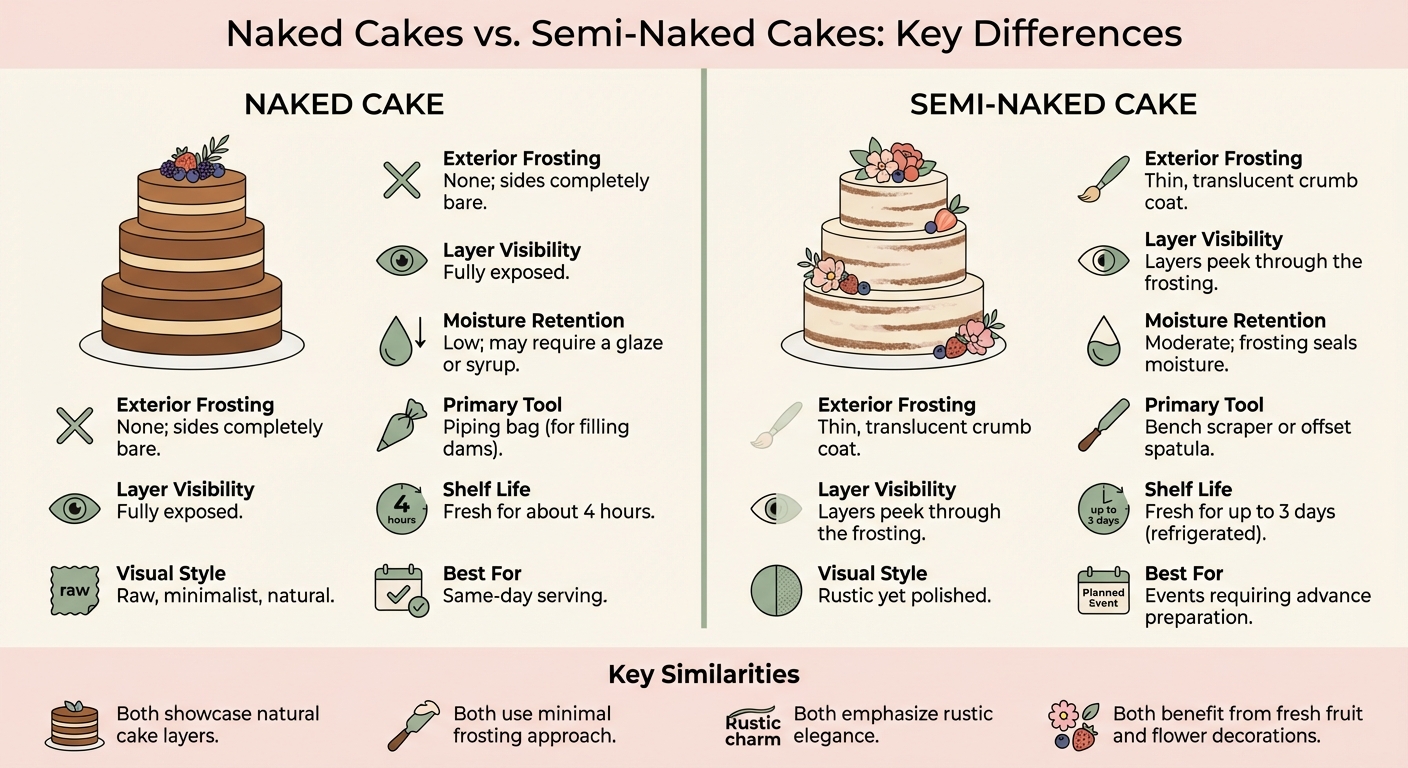
Naked vs Semi-Naked Cakes: Key Differences and Characteristics
These two cake styles stand apart primarily in their frosting coverage, which influences both their appearance and practicality. Let’s break down the differences between naked and semi-naked cakes.
What Is a Naked Cake?
A naked cake is all about simplicity, showcasing the cake layers without much frosting on the sides. As Caren White from America's Test Kitchen explains:
"The exterior is then left either completely bare... or has a thin layer of frosting that is scraped along the sides of the cake."
This style emphasizes the cake’s natural texture, color, and crumb. However, the lack of frosting on the sides means the cake can dry out faster. To combat this, bakers often use a light glaze or simple syrup and refrigerate the cake before decorating. Another challenge? Without frosting to act as a "glue", assembling the layers can be tricky, especially for taller cakes.
What Is a Semi-Naked Cake?
Semi-naked cakes take the minimalist look a step further by adding a whisper-thin crumb coat of frosting. This thin layer is applied and then carefully scraped away until the cake layers peek through. Melissa Diamond, founder of My Cake School, describes it as:
"A very thinly applied layer of frosting will give the feeling of a naked cake with exposed layers, but it also protects the layers from drying out."
This approach offers a blend of rustic charm and a touch of sophistication. The crumb coat locks in moisture, keeping the cake fresh for up to three days in the refrigerator . Some bakers even shift the layers slightly to create an artistic edge effect, adding to the cake’s visual appeal.
| Feature | Naked Cake | Semi-Naked Cake |
|---|---|---|
| Exterior Frosting | None; sides completely bare | Thin, translucent crumb coat |
| Layer Visibility | Fully exposed | Layers peek through the frosting |
| Moisture Retention | Low; may require a glaze or syrup | Moderate; frosting seals moisture |
| Primary Tool | Piping bag (for filling dams) | Bench scraper or offset spatula |
| Visual Style | Raw, minimalist, natural | Rustic yet polished |
Tools and Ingredients from Gloria's Cake & Candy Supplies
Creating a rustic cake starts with having the right equipment and top-tier ingredients. Gloria's Cake & Candy Supplies, a trusted name for LA bakers since 1972, has everything you need to perfect the naked and semi-naked cake look.
Here’s a closer look at the tools and ingredients that make all the difference.
Tools for Layering and Frosting
The right tools ensure a smooth, exposed finish that brings out the cake’s natural beauty. A rotating turntable is key for that flawless sheer frosting layer. It lets you spin the cake effortlessly while holding a scraper steady to remove excess frosting in one motion. Pair it with a long offset spatula to spread frosting between layers, and a bench scraper to reveal the cake’s natural layers by sweeping off the extra frosting . As recipe developer Megan Scott puts it:
"A large offset spatula is a game-changer for frosting layer cakes. The larger surface area helps you spread the frosting evenly and thinly."
To prep your layers, use a serrated knife to level off domed tops and slice layers evenly. Piping bags with the tips snipped off are perfect for applying frosting between layers or creating dams to keep fillings in place. Don’t forget sturdy cake boards - they’re essential for stacking, decorating, and safely transporting your masterpiece. A pastry brush is another must-have, ideal for applying simple syrup or a clear glaze to exposed layers to lock in moisture.
Ingredients for Better Results
Great tools need to be paired with quality ingredients to achieve that rustic, polished finish. High ratio shortening is a favorite for buttercream - it holds its shape beautifully and spreads thinly without damaging the cake’s surface. For decorative touches like chocolate shards or curls that add texture to your design, Mercken's chocolate wafers melt smoothly and set with a professional finish.
If you’re working with soft fillings like fruit compote or lemon curd, pipe a 1-inch buttercream dam around the edge of each layer to keep everything in place. For naked cakes, brushing a clear glaze on the exposed sides helps seal in moisture and keeps the sponge from drying out.
To frost an 8-inch, three-layer semi-naked cake, you’ll need about 3.5–4.25 cups of frosting, depending on how thick or thin you want the veil. If you’re unsure, Gloria’s knowledgeable staff can guide you through the process, helping you calculate quantities and refine your techniques with in-person advice.
How to Layer and Frost Your Cake
Leveling and frosting can transform a shaky cake into a polished, rustic showpiece. By using a few clever tricks, you can recreate bakery-level results right in your own kitchen.
Leveling and Stacking Layers
Always start with fully cooled cakes. Attempting to level warm layers will only lead to crumbling. Once your cakes are cool, cut them at eye level to maintain precision. Begin by scoring the cake: make shallow cuts about a third of the way in from the edge, rotate the cake 90°, and repeat around the circumference before slicing all the way through.
Pastry chef Lisa Ruland offers this tip:
"Stack your top cake layer upside down so the bottom of the cake faces up. Now you have a perfectly flat, crumb-free cake top."
Before you start stacking, anchor the first layer by placing a small dollop of frosting in the center of your cake board. This acts as "glue" to keep the layers from sliding during assembly. After stacking all the layers, press down firmly on the top with both hands to release any trapped air and ensure the layers settle evenly - this helps prevent frosting from bulging later on.
Scraping for a Smooth Finish
The scraping technique is key to achieving that trendy semi-naked cake look. Begin by spreading a thin layer of frosting around the sides of the cake. Hold a metal bench scraper parallel to the cake and rotate the turntable with your other hand. Apply steady pressure to smooth the frosting and reveal the layers without damaging the surface. If you spot any gaps or bare spots, dab on a bit more buttercream and scrape again, using gentler pressure.
For an extra-polished finish, try the "hot scraper" method. Run your metal bench scraper under hot water, dry it completely, and make one final pass around the cake. As Chelsweets explains:
"The heat from the metal ever so slightly melts the frosting, creating a shiny, silky smooth finished look."
Once you've finished scraping, you might notice a "crown" of frosting at the top edge. Use an offset spatula to gently swipe this excess inward toward the center, creating clean, sharp edges. With your layers leveled and edges perfected, your cake is ready for its final touches, whether that's visible fillings or decorative accents.
sbb-itb-529d1c3
Choosing and Applying Fillings
Fillings are what give a rustic cake its charm. Buttercream - whether American, Italian, or Swiss - is a great choice for structure, but cream cheese frosting or stabilized whipped cream can also secure the layers beautifully. To add a touch of homemade flair and visual variety, try layering with fruit preserves, citrus curds, or chocolate ganache.
Selecting Fillings for Rustic Cakes
Once you've picked your base filling, think about how to elevate both the cake's texture and appearance. Adding small berries, like raspberries or blackberries, can enhance the overall look while also giving the cake a bit more structure. If you're feeling creative, ombre-tinted or colored buttercream fillings can make the layers pop against the cake's natural tones. For lighter, summery cakes, mascarpone cream is a perfect match, while ganache adds a rich, indulgent feel to darker sponges.
Maintaining Filling Visibility
To keep your fillings neat and visible, try using a stiff buttercream dam. Pipe a ring along the edge of each layer to contain softer fillings, like preserves or curd, and prevent them from bulging out. For extra support, add more powdered sugar to your dam buttercream to make it firm enough to hold the weight of the layers above.
Cookbook author and food photographer Tessa Huff offers this tip:
"Pipe the frosting slightly away from the very edge of the cake to allow some space for the frosting to shift and squeeze out a bit as the cake layers are stacked on top of each other."
This approach creates just the right amount of filling visibility without sacrificing stability. Once the cake is stacked, let it rest at room temperature for about 20 minutes, then refrigerate it for 20–30 minutes to firm up the layers. After chilling, scrape the edges gently to maintain the rustic look while ensuring everything stays in place. This method highlights the natural beauty of the cake layers while keeping them secure.
Decorating Your Rustic Cake
Exposed layers create a perfect backdrop for subtle, rustic decorations. The goal is to enhance the cake’s natural charm without overpowering its simple elegance. These decorating ideas build on the layering and scraping techniques you’ve already mastered, adding finishing touches that highlight the cake’s organic beauty. As baker and blogger Zainab Storms says:
"The beauty of rustic naked cakes is that they can be imperfect and beautiful."
Using Fresh or Dried Flowers
Flowers can transform a rustic cake into a showstopper. Roses look stunning when clustered on top, while eucalyptus adds a graceful touch when draped along the sides. If you’re using edible flowers, you can place them directly on the cake. For non-edible blooms, be sure to use a clear plastic barrier between the flowers and the cake, and wrap the stems in buttercream to secure them. Add fresh flowers no more than 24 hours before your event to keep them looking their best. Store the decorated cake in the refrigerator, and always remove the flowers before serving.
Adding Seasonal Fruits and Herbs
Seasonal fruits bring vibrant color and texture to your cake. Fresh berries piled on top make an eye-catching centerpiece, while fruit arranged around the base of the cake stand anchors the design. Candied citrus slices add a touch of sweetness and elegance. For a frosty effect, lightly dust berries with powdered sugar. Herbs like mint and rosemary complement the rustic look and add a fresh, fragrant touch. If your cake features fruit fillings like blueberry or cherry, the exposed layers will naturally showcase these colorful additions as part of the decoration.
Adding Texture with Edible Finishes
Simple edible finishes can elevate your rustic cake without complicating its design. A light dusting of powdered sugar or cocoa adds a delicate touch. For cakes without frosting, brushing on a clear glaze adds a gentle sheen and helps retain moisture. Ganache or caramel drips along the edges create a dramatic effect, while gold leaf offers a modern, elegant twist. Crushed nuts, chocolate shards, or mini meringue kisses add texture and depth. To keep exposed layers moist, mix 1 teaspoon of unflavored gelatin with 1/2 cup boiling water and 1 teaspoon sugar, stir until thickened, and brush it onto the cake layers before assembling.
Storage and Transport Tips for Exposed Layers
Exposed cake layers can dry out in no time. Naked cakes, with no frosting, typically stay fresh for about 4 hours. Semi-naked cakes, which have a thin layer of frosting, hold up a bit better but still need proper care to prevent drying out.
Keeping Cake Layers Fresh
To keep uniced cake layers from losing moisture or picking up fridge odors, wrap them tightly in plastic wrap once they’ve cooled. If your cake is already assembled, store it in an airtight container or place it under a sturdy cake dome. Cakes with perishable fillings, like custard or cream cheese frosting, should always be refrigerated. This not only preserves the filling but also helps stabilize the cake for easier handling and transport.
In warm or humid conditions, refrigerate cakes for up to three days. Before serving, let the cake sit at room temperature for 1.5 to 2 hours to bring out its best flavor and texture.
How to Transport Cakes Without Damage
Once your cake is properly stored, the next challenge is getting it to its destination intact. Start by chilling the cake for at least an hour - or even overnight - before transporting it. Use a cake box that matches the size of your cake board to keep the cake from sliding around during the drive.
Place the box on a flat surface, like the car’s floorboard, and add a non-slip liner or yoga mat underneath to minimize movement caused by road vibrations. Before loading the cake, cool down your car by running the air conditioning on high.
For tiered cakes, it’s often safer to assemble them at the venue. Whitney from Sugar and Sparrow advises:
"For a four-tiered cake, I would do the assembly at the venue instead of trying to transport it all built up (much safer that way!)"
Lastly, wait until you’ve arrived at the venue to add delicate decorations like fresh flowers. This prevents them from wilting or falling off during the drive.
Conclusion
Making a professional-looking naked or semi-naked cake is all about nailing a few essential techniques. Start by leveling your cake layers with a serrated knife or cake leveler to ensure a sturdy base. Next, pipe a frosting dam about 1/2 inch from the edge to keep softer fillings from spilling out. For naked cakes, brushing the exposed layers with simple syrup helps lock in moisture - just be sure to serve them the same day. Semi-naked cakes, on the other hand, offer a bit more leeway. A thin "sheer veil" of buttercream not only keeps the cake moist but also maintains that rustic charm.
Using a turntable and a bench scraper held at a 90-degree angle will give you a smooth, scraped finish, while an offset spatula is ideal for creating sharp, defined edges. As Zainab Storms from King Arthur Baking explains:
"The beauty of rustic naked cakes is that they can be imperfect and beautiful".
And if things don't look perfectly polished, pastry chef Sam Adler reminds us:
"If it looks a little messy we just call it rustic!".
To keep your cake stable, chill it for 20–30 minutes after assembling. This step is especially helpful before decorating or transporting the cake. Together, these techniques create a cake that balances simplicity and elegance.
For the best results, invest in high-quality tools and ingredients. Gloria's Cake & Candy Supplies offers everything from turntables and offset spatulas to premium ingredients that ensure your cake stays intact and looks stunning. Whether you're a home baker experimenting with this style or a seasoned pro refining your skills, naked and semi-naked cakes are a forgiving, time-efficient option that highlights the natural beauty of your creation.
FAQs
How can I keep a naked cake from drying out?
To keep a naked cake moist, use plenty of filling or frosting between the layers. This not only adds flavor but also acts as a barrier, protecting the cake from drying out due to air exposure.
If the cake will be out for a while, loosely cover it with plastic wrap or place it in a cake box to minimize air contact. For the best texture and freshness, assemble the cake as close to serving time as possible and store it in a cool, dry spot.
What are the best ways to decorate a semi-naked cake?
Semi-naked cakes stand out with decorations that highlight their rustic yet refined appeal. Fresh flowers remain a classic option, effortlessly adding elegance and charm while preserving the cake's natural allure. For a pop of color and a touch of freshness, fruits, berries, and herbs are fantastic choices, creating a lively, organic vibe.
If you're looking for a slightly more polished finish, consider light buttercream piping or a delicate glaze. These additions can subtly enhance the texture without taking away from the exposed layers. The key is balance - let the cake's simplicity shine while using decorative accents to complement its rustic style.
What’s the best way to safely transport a semi-naked cake?
To safely transport a semi-naked cake, start by placing it on a sturdy cake board that's at least 2 inches larger than the cake. This extra space helps support the cake and minimizes the chance of damage during the trip.
Next, place the cake in a box that fits snugly to prevent it from sliding around. To keep the box from moving in your vehicle, put a non-slip material like a silicone mat or towel underneath. If the cake is especially delicate, chilling or lightly freezing it beforehand can help maintain its shape while traveling.
Lastly, handle the cake gently and keep it away from heat or direct sunlight to ensure it stays fresh and retains its rustic charm.
Shop Cake Decorating Supplies
Offset spatulas, turntables, piping tips, and edible flowers for naked and semi-naked cakes.
Shop at Gloria's11117 Washington Blvd, Culver City • Tue-Sat 10am-6pm • (323) 289-8807
Related Blog Posts
- How to Make Rustic Fall Cake Toppers
- How to Create Perfect Burn Cake Effects: Professional Techniques and Tools
- How to Make 'Ugly Cakes' That Look Perfectly Imperfect
- Autumn Harvest Festival Treats: Apple, Pumpkin, and Spice Decorating

