

Creating the perfect red velvet cake requires balancing color, flavor, and texture. The challenge? Achieving a vibrant red hue without introducing bitterness or altering the cake’s soft, velvety texture. Here’s the key:
- Use natural cocoa powder: Its acidity reacts with buttermilk and vinegar to enhance red tones.
- Choose gel food coloring: It delivers bold color with minimal impact on taste or texture.
- Control acidity and pH: Ensure proper leavening and color stability by balancing acidic ingredients like buttermilk and vinegar with baking soda.
- Avoid overmixing: Mix ingredients just enough to maintain a tender crumb.
- Monitor baking temperature: Stick to 350°F, or slightly lower for natural dyes, to preserve color.
Get the PERFECT RED VELVET Color EVERYTIME
How Ingredients Affect Red Velvet Cake
The signature color, flavor, and texture of red velvet cake come from a combination of natural cocoa powder, buttermilk, vinegar, and food coloring. These ingredients work together to create the cake's distinct characteristics.
How Color and Flavor Work Together
Natural cocoa powder contains anthocyanins, compounds that change color depending on pH levels. When exposed to acidic ingredients like vinegar or lime juice, these anthocyanins turn red. As cookbook author Nik Sharma explains:
"when mixed into an acidic solution like lime juice or vinegar, [anthocyanins] turn red".
To achieve the vibrant crimson hue associated with modern red velvet cakes, synthetic food coloring is often added to amplify the natural color reaction.
Beyond its role in color, cocoa also adds a subtle, bittersweet depth to the cake's flavor. However, red velvet recipes typically use only about 2 tablespoons of cocoa, unlike chocolate cakes, which often include 3/4 cup. It's important to use natural, non-alkalized cocoa powder because Dutch-processed cocoa neutralizes acidity, which prevents the anthocyanins from creating the desired red hue.
This interplay between color and flavor underscores the importance of balancing acidity and cocoa in red velvet cake recipes.
Getting the Right Balance of Acidity and Cocoa
The acidity from buttermilk and vinegar does more than enhance color - it’s a key factor in achieving the cake’s light, velvety texture. When combined with baking soda, these acidic ingredients create a chemical reaction that leavens the batter, resulting in a soft and airy crumb. Buttermilk also helps break down gluten, ensuring the cake remains tender rather than dense or chewy.
Temperature matters, too. Using room-temperature buttermilk and eggs allows them to blend smoothly with fats, promoting even color distribution and a better rise. Cold ingredients, on the other hand, can cause the batter to curdle, leading to uneven texture and inconsistent color.
The batter’s pH level also plays a crucial role in maintaining the cake’s vibrant red color during baking. If the batter becomes too alkaline - often from adding too much baking soda - the red can fade into a dull red-orange or brown. Color Kitchen highlights this point:
"A simple modification [lowering pH] makes all the difference as to whether or not the color bakes out in the center leaving a red-orange, or maintains a bright red color throughout the entire cake".
Preventing Bitter Aftertastes
Bitterness in red velvet cake is rarely caused by the interaction of cocoa and acids; this balance, along with sugar, usually mellows any natural bitterness. Instead, off-flavors often come from overusing synthetic food coloring. Excess liquid coloring, especially lower-quality types, can leave a chemical aftertaste.
A better option is concentrated gel or paste food coloring. These deliver intense color with as little as one tablespoon, preserving the batter’s flavor and texture. To avoid overdoing it, start with a small amount and add more gradually until the desired shade is achieved.
For those seeking natural alternatives, beet juice can provide a vibrant hue. However, precise measurements are crucial - about 11–13 grams per pound of cake mix - to maintain the color without altering the flavor.
Selecting Food Coloring for Bright Red Without Bitterness
Synthetic Gel vs. Natural Color Options
If you’re aiming for a bright, true red in your baked goods, gel food coloring is your best bet. Its high concentration means you only need about a tablespoon, which helps preserve the texture of your batter and avoids that unpleasant chemical or metallic aftertaste.
On the other hand, liquid food coloring requires significantly more to achieve the same intensity. Some recipes even call for an entire one-ounce bottle. Since liquid dyes are water-based, they can thin your batter, leading to textural issues like a dense or sunken cake.
For those who prefer natural alternatives, options like beet powder, beet juice, or hibiscus can provide a cleaner ingredient list. However, they come with limitations. As Charlotte Strong from Hummingbird Bakery points out:
"Some manufacturers have reverted to natural-only food colourings and these unfortunately will not give the correct depth of colour... your Red Velvet sponges will most likely turn out a darker brown-red or terracotta shade".
If you choose natural coloring, you might notice a more muted, terracotta hue. To stabilize the color, try adding a little vinegar or lemon juice, and consider lowering your oven temperature by 10–15°F to help preserve the red tones.
How to Use Gel Colors Properly
Once you’ve picked your food coloring, proper mixing is essential to achieve an even, streak-free color. Using the paste method is a smart approach. Combine your gel food coloring with cocoa powder and vanilla until smooth. Add this paste to the wet ingredients (butter, sugar, and eggs) before incorporating the dry ingredients.
Since gel colors are highly concentrated, start with a very small amount - use a toothpick or small spatula for precision. Remember, the color deepens as the batter rests, so stop a shade or two before your desired hue and let it sit for 10–15 minutes. To ensure accuracy, always check the color in natural light, as artificial lighting can make red tones appear dull or orange.
Product Recommendations from Gloria's Cake & Candy Supplies
For consistent and vibrant results, consider the professional-grade gel colors available at Gloria's Cake & Candy Supplies. These products are designed to deliver a bright red without the bitterness often associated with red dyes. For example:
- AmeriColor Super Red: Known for its concentration and heat stability, this is a favorite among professional bakers.
- Wilton No-Taste Red: Specifically formulated to avoid the metallic aftertaste common with red dyes, making it a great choice for home bakers.
- Chefmaster Liqua-Gel: Available in a "no-taste" variant, this option is perfect for larger batches and helps reduce chemical flavors.
These gel colors are bake-stable, meaning they retain their vibrant hue even at standard baking temperatures of 350°F. Whether you’re baking a single cake or tackling a large-scale project, Gloria's expert staff can guide you to the best choice for your needs.
sbb-itb-529d1c3
Getting the Right Ingredient Ratios and Mixing Techniques
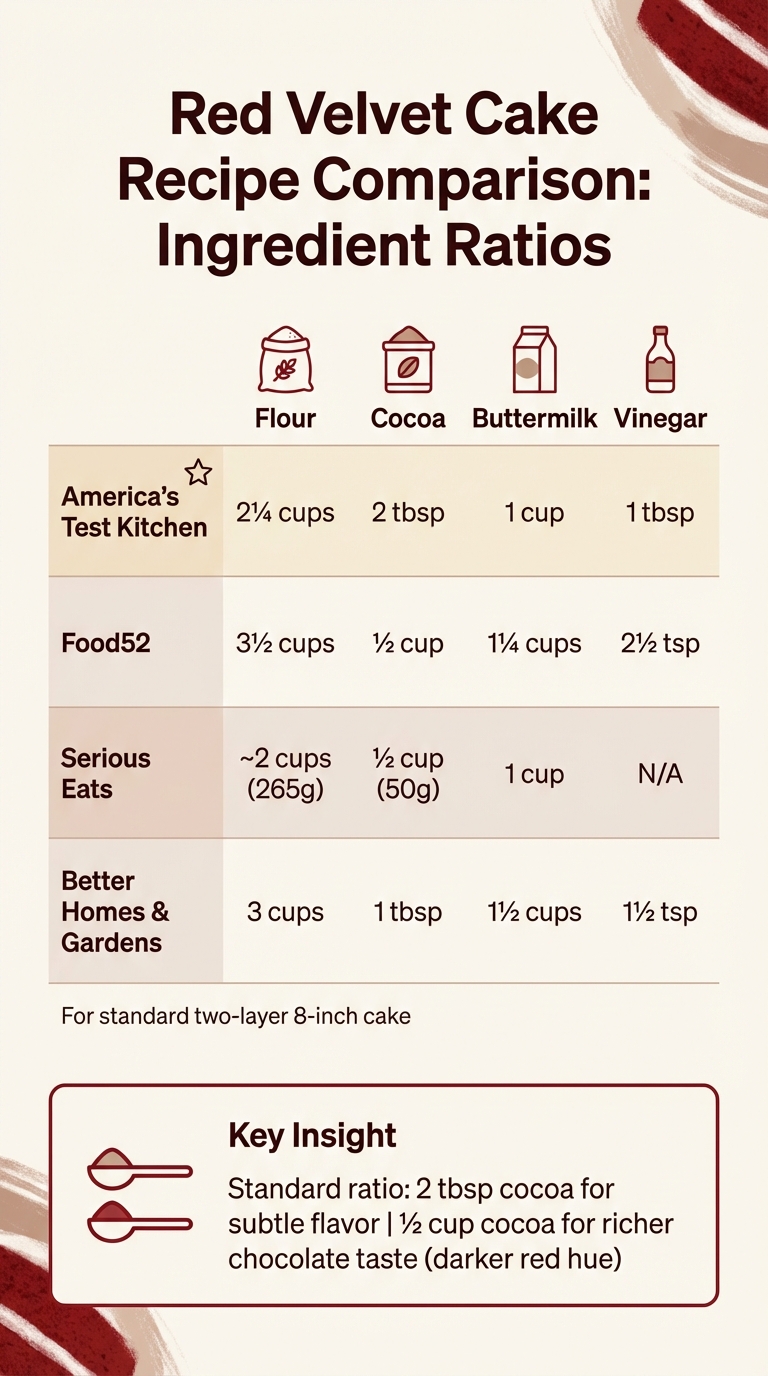
Red Velvet Cake Recipe Ingredient Ratios Comparison Chart
Base Recipe and Adjustments
For that classic red velvet cake texture and color, natural unsweetened cocoa powder is your go-to. Its acidity works wonders with buttermilk and baking soda, giving the cake its signature lift and enhancing the red dye. Brian Levy, a recipe developer, explains:
"The higher acidity in natural cocoa reacts with the cake's baking soda and buttermilk to properly leaven the cake. Natural cocoa is also lighter in color than Dutch processed cocoa, making it easier for the red to show through".
For a standard two-layer 8-inch cake, aim for 2 tablespoons of cocoa powder per 2¼ cups of flour for a subtle chocolate flavor. If you want a richer chocolate taste, you can bump up the cocoa to ½ cup, though this will slightly darken the cake's red hue. To balance the acidity, use 1 cup of buttermilk and 1 tablespoon of distilled white vinegar. For coloring, you'll need 1 tablespoon of gel paste food coloring or 2 tablespoons of liquid food coloring.
| Recipe Source | Flour | Cocoa | Buttermilk | Vinegar |
|---|---|---|---|---|
| America's Test Kitchen | 2¼ cups | 2 tbsp | 1 cup | 1 tbsp |
| Food52 | 3½ cups | ½ cup | 1¼ cups | 2½ tsp |
| Serious Eats | ~2 cups (265g) | ½ cup (50g) | 1 cup | N/A |
| Better Homes & Gardens | 3 cups | 1 tbsp | 1½ cups | 1½ tsp |
Mixing for Even Color and Texture
Once you've nailed the right ingredient ratios, mixing them properly is key to achieving a smooth, vibrant batter and a tender crumb. Start by creaming room-temperature butter and sugar for 5–7 minutes until pale and fluffy. This step incorporates air, which is essential for a light texture. Next, mix the cocoa powder and gel food coloring into a paste and blend it into the creamed butter and sugar for about 30 seconds.
When combining the dry and wet ingredients, alternate additions to avoid overmixing. Add ⅓ of the sifted flour and baking soda, followed by ½ of the buttermilk. Repeat, finishing with the last ⅓ of the flour. Mix on low speed each time for about 30 seconds to prevent overworking the batter, which can lead to a dense cake.
For an extra lift, some bakers recommend mixing the baking soda and vinegar separately in a small bowl. Add this bubbling mixture to the batter at the very end and stir gently for about 10 seconds. Finally, use a rubber spatula to scrape the bottom of the bowl and ensure everything is evenly combined without overmixing.
Baking Tips for Best Results
Prepare your pans by greasing them and dusting them with cocoa powder. This prevents white streaks on the cake's surface. Before baking, tap the pans gently on the counter to release any trapped air bubbles.
Bake at 350°F for 25–30 minutes for standard 8-inch rounds, or 24–26 minutes if you're making cupcakes. The cake is ready when a toothpick inserted into the center comes out clean. Following these steps, America's Test Kitchen's recipe has earned a 4.5 out of 5-star rating from 169 reviewers, many of whom praise its "extra-tender" crumb, thanks to the buttermilk-vinegar-soda reaction.
Troubleshooting Common Problems
When your cake doesn’t turn out as expected, identifying the cause is key. Let’s break down some common issues and how to address them.
Fixing Bitter or Chemical Flavors
A bitter or metallic aftertaste often points to excess liquid food coloring. Instead, opt for gel-based food coloring - it’s more concentrated, so you’ll need less, reducing the risk of off-flavors.
Another culprit could be too much natural cocoa. While cocoa adds richness, overdoing it can amplify bitterness. Balance it with sugar and fats to keep the flavor in check. If you’re using natural colorants like matcha or black cacao powder, remember that adding more for deeper color can also intensify bitterness. Maggie Frank, Head Pastry Chef, advises:
"As the color deepens towards black, the inherent bitterness of the cacao becomes more pronounced. To counteract this, it is recommended to use black cacao powder sparingly and to taste".
Expired baking soda is another common offender. After about six months, it loses its effectiveness, leaving behind unreacted leavening agents that taste harsh. Always check the date and replace as needed.
Color Problems: Too Brown or Not Red Enough
If your cake looks more brown than red, the type of cocoa you’re using might be to blame. Dutch-processed cocoa can muddy the red tones, so stick with natural cocoa, which reacts with acidic ingredients like buttermilk and vinegar to enhance the red hue. Recipe developer Brian Levy explains:
"Natural cocoa is also lighter in color than Dutch processed cocoa, making it easier for the red to show through the chocolate's brown".
Temperature also plays a role. Bake at a consistent 350°F, or lower the temperature by 10–15°F when using natural dyes to preserve the vibrant red color. Additionally, use concentrated gel or paste food coloring rather than liquid dyes. Liquid food coloring is weaker and can thin your batter without providing strong color.
Texture Problems: Dense or Gummy Cakes
A dense or gummy cake often results from overmixing the batter after adding flour. Overmixing develops gluten, which can make the cake tough. Mix just until the flour is incorporated, leaving no streaks. As Brian Levy emphasizes:
"Be careful not to overmix once your flour is added, though, as overbeating the batter will develop too much gluten and make the cake tough".
Temperature matters here too. Use room-temperature butter, eggs, and buttermilk to ensure proper emulsification and air incorporation.
Don’t forget to check your leavening agents. Expired baking powder or baking soda won’t create the gas needed to lift the cake, leaving it dense and flat. Alexander Roberts puts it plainly:
"Baking powder will lose its lifting power, leaving your cakes helplessly squat and dense in their pans".
Finally, measure your flour by weight, not volume. Using too much flour can dry out the batter and weigh down your cake. A digital kitchen scale, which costs around $20, can make a big difference in achieving consistent results.
Conclusion
Creating the perfect red velvet cake comes down to using high-quality ingredients, maintaining precise measurements, and mastering the right techniques. The magic lies in the chemical reaction between natural cocoa and acidic ingredients like buttermilk and vinegar, which brings out the cocoa’s natural pigments. To achieve that signature vibrant color without any bitterness, concentrated no-taste gel food coloring is the way to go.
As Brian Levy beautifully describes:
"A properly made red velvet cake can be a thing of beauty: layers of moist scarlet cake flavored with bittersweet cocoa and tangy buttermilk stacked with thick, tart, and buttery cream cheese frosting, each bite as lush as…well, velvet."
For the best results, make sure your ingredients are at room temperature, weigh your flour for accuracy, and mix just until the batter comes together to ensure a tender crumb. And when it comes to coloring, stick with no-taste gel colors to avoid any unpleasant metallic aftertaste. These small but essential details can transform your cake into a masterpiece.
Whether you’re just starting out or have years of baking experience, the right tools and guidance can make all the difference. Since 1972, Gloria's Cake & Candy Supplies has been a trusted resource for the Los Angeles baking community, offering professional-grade gel colors, natural cocoa powder, precision tools, and one-on-one consultations to tackle any baking challenge.
Stop by Gloria's Cake & Candy Supplies for same-day product pickup, hands-on cake decorating classes, and specialty items that ensure your red velvet cake turns out flawless every time.
FAQs
How do I get a vibrant red color in red velvet cake without a bitter taste?
When aiming for the perfect red hue without any bitterness, opt for high-quality, bake-stable food coloring - either gel or liquid. Use just enough to get the shade you want, avoiding overuse that could alter the flavor. If you're looking for a more natural option, beet juice or beet powder works wonderfully, offering a deep red tone while keeping the cake's taste intact. Be sure to balance the coloring with the other ingredients to preserve a smooth and delightful flavor.
Why is acidity important for the texture of a red velvet cake?
Acidity is a key factor in achieving the soft, tender texture that sets red velvet cake apart. Ingredients like buttermilk and a dash of vinegar lower the batter’s pH, which works in two important ways: it reacts with baking soda to release carbon dioxide, creating a light and airy crumb, and it softens gluten, ensuring the cake stays moist and delicate.
Beyond texture, acidity also enhances the cake’s flavor by balancing its sweetness with a slight tang. It even plays a part in the cake’s signature reddish-brown color by interacting with cocoa powder. Without these acidic components, the cake risks becoming denser, less tender, and missing its iconic melt-in-your-mouth quality.
What’s the difference between natural and synthetic food colorings in red velvet cake?
Natural food colorings, like beet juice or pureed beets, can give red velvet cake a soft, pinkish tint. However, these natural pigments tend to be less intense and often fade during baking, leaving behind only a subtle color. Additionally, they introduce extra moisture into the batter, which can slightly change the cake's texture. The final color usually ends up being more muted and closer to pink than the deep red many people associate with red velvet cake.
On the other hand, synthetic food colorings, such as gel or liquid dyes, are the go-to choice for achieving the bold, vibrant red that defines the classic look. Gel colors are highly concentrated, so just a small amount is enough to produce a rich red without altering the batter's consistency. Liquid dyes can also work well, but they often require a larger quantity, which might slightly thin the batter. Both options are bake-stable, ensuring the color stays vivid even after baking. For the most striking results, opt for high-quality, bake-stable synthetic dyes to get that perfect red hue without any unpleasant aftertaste.
Shop Supplies at Gloria's
Everything mentioned in this article is available at our Culver City shop. Come see it in person or browse online.
Shop at Gloria's11117 Washington Blvd, Culver City • Tue-Sat 10am-6pm • (323) 289-8807
Related Blog Posts
- Color Psychology in Cake Design
- Thanksgiving Cake Decorating: Fall Colors and Flavors
- Gel vs. Liquid vs. Powder: The Complete Food Coloring Guide for Bakers
- Achieving True Black and Bright Red: Professional Food Coloring Techniques

