

When it comes to coloring your St. Patrick's Day treats, you have two main options: natural colorants or artificial dyes. Each has its strengths and weaknesses, depending on what matters most to you - vibrancy, flavor, stability, or health considerations. Here's a quick breakdown:
- Natural options (like spinach powder, matcha, or spirulina) offer softer greens and added nutrients but can alter taste and are less stable under heat or light.
- Artificial dyes (like FD&C Green No. 3) deliver bold, consistent color without affecting flavor but may raise concerns about health and regulatory changes.
Key takeaway: Use artificial dyes for bright, heat-resistant colors in baked goods. Opt for natural dyes in low-heat recipes if you prioritize recognizable ingredients or nutritional value.
Testing out Natural vs. Artificial Food dye | Cupcake Frosting
1. Natural Green Coloring Agents
When it comes to adding a festive touch to your St. Patrick's Day treats, natural green colorants sourced from plants offer a vibrant and healthier alternative to synthetic dyes. Popular choices like spinach powder, matcha, and spirulina each bring their own unique qualities to the table.
Vibrancy
Spinach powder stands out for its ability to create a bright "shamrock green" color that closely resembles artificial dyes. In March 2025, Kelli Solomon, Senior Social Media Editor at Serious Eats, tested four natural green dyes in water, Shamrock Shakes, and white cake frosting. She remarked:
Spinach powder is the clear winner. When you think of shamrock green, this is it.
Meanwhile, spirulina offers intense pigmentation but leans toward a blue-green or "Tropical Rainforest" tone, rather than a true shamrock green. Matcha, on the other hand, produces a softer, pastel or grass-green hue. It's worth noting that natural dyes often result in lighter shades compared to synthetic ones and tend to fade faster when exposed to heat or light.
Taste Impact
The flavor of natural colorants is just as important as their appearance. Spinach powder has a mild, slightly sweet taste that often goes unnoticed in frostings and cakes. Matcha, however, delivers a distinct earthy, vegetal flavor that can overpower delicate recipes. Spirulina, while offering vibrant color, comes with a strong "oceanic" aftertaste that doesn't always pair well with sweet treats. During Solomon's testing, spirulina's bold color was offset by its less appealing "ocean-forward" flavor, making spinach powder the more versatile option with its subtle taste.
Stability
Natural green pigments, primarily derived from chlorophyll, are sensitive to heat, light, and oxygen, which can cause them to degrade quickly. Food stylist Jason Schreiber cautions that natural dyes may lose their vibrancy or even turn brown when exposed to high temperatures.
Powdered natural dyes can fade within 24 hours if left in direct sunlight, and acidic environments can shift bright greens to olive-brown tones. To preserve their color, these dyes work best in no-heat or low-heat applications such as buttercream, royal icing, or meringue cookies. When using homemade liquid dyes, you may also need to adjust the liquid content of your recipe for optimal results.
Health Considerations
For bakers who prioritize recognizable ingredients and added nutrition, natural colorants are an appealing choice. Spinach powder, for instance, provides iron and vitamin K, while matcha is rich in catechins and L-theanine. Additionally, some natural dyes, like those derived from beets, contain nitrates that support heart health.
Regulatory changes are also boosting the appeal of natural options. The FDA will revoke authorization for FD&C Red No. 3 starting January 1, 2027, and West Virginia plans to ban all artificial food dyes beginning January 1, 2028. These shifts, combined with the nutritional perks and performance of natural dyes, make them a thoughtful choice for Irish-themed creations.
2. Artificial Green Food Dyes
Artificial green food dyes are known for their bright, consistent color and durability, making them a go-to choice for vibrant St. Patrick's Day treats and other festive creations. Unlike natural colorants, these synthetic options provide intense, electric hues that stand out in any recipe.
One of the most recognized artificial green dyes is FD&C Green No. 3 (Fast Green FCF), which the FDA approved in 1982 for use in products like baked goods, cereals, and ice cream. Its concentrated formula ensures a bold color with minimal product, making it a favorite for both home and commercial kitchens.
Vibrancy
The standout feature of artificial dyes is their ability to deliver vivid and uniform green shades. Because they are made from concentrated chemical compounds, a small amount goes a long way. For those who can't find FD&C Green No. 3, mixing FD&C Blue No. 1 with FD&C Yellow No. 5 can achieve a similar vibrant green. This flexibility and intensity make them indispensable for creating eye-catching desserts and decorations.
Taste Impact
One major advantage of synthetic dyes is their neutral flavor profile. Unlike natural colorants, which can sometimes alter the taste of food, artificial dyes are designed to preserve the original flavor of recipes. Their high concentration means you only need a few drops, ensuring the color doesn't overpower the dish.
Stability
Artificial dyes are also prized for their heat resistance and long-lasting color. According to the FDA, certified color additives are formulated to:
offset color loss due to exposure to light, air, temperature extremes, moisture and storage conditions.
This stability makes them perfect for high-heat applications like candy-making or baking, where natural pigments often fade or change color. Additionally, these dyes undergo strict FDA testing for contaminants like lead, arsenic, and mercury, ensuring they meet safety standards when used correctly.
Health Considerations
While artificial dyes are considered safe by the FDA when used as directed, some research, such as the Southampton Study, has raised concerns about potential links between certain dyes and hyperactivity in children. Regulatory changes reflect ongoing scrutiny: for instance, the FDA has banned Red No. 3, effective January 2027, and West Virginia plans to prohibit all artificial food dyes starting in 2028.
Despite these concerns, artificial dyes remain a cost-effective option. Natural alternatives can significantly increase production costs, sometimes accounting for up to 50% of a product's total cost. For many, the affordability and vibrant results of synthetic dyes outweigh the potential drawbacks.
sbb-itb-529d1c3
Pros and Cons
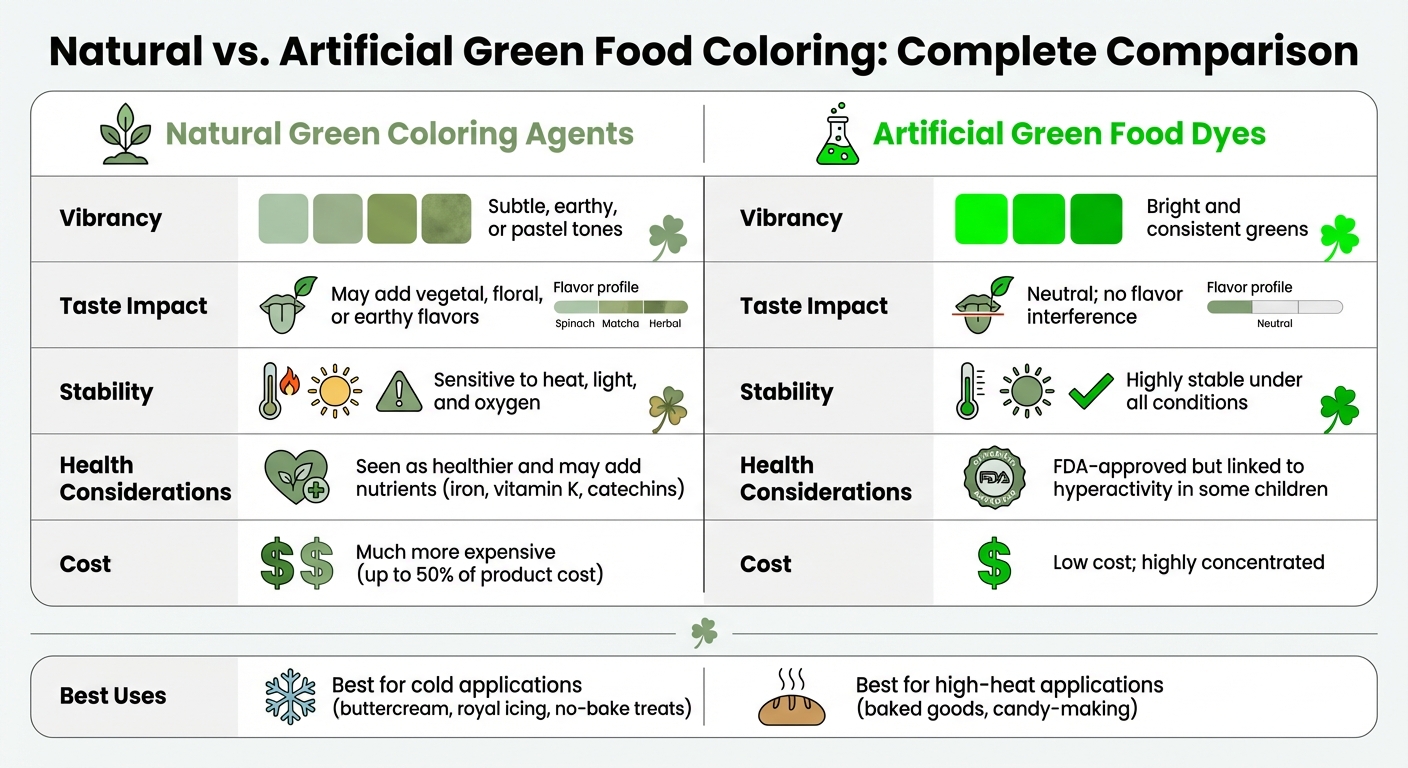
Natural vs Artificial Green Food Coloring Comparison Chart
When deciding between natural and artificial green coloring for your Irish-themed treats, it's important to weigh factors like flavor, appearance, and cost.
Artificial dyes stand out for their vibrancy and reliability. According to the FDA, certified color additives are "synthetically produced... and used widely because they impart an intense, uniform color, are less expensive, and blend more easily to create a variety of hues". These dyes ensure bright and consistent colors that hold up through baking, storage, and light exposure - all without altering the flavor.
Natural colorants, on the other hand, come with both benefits and challenges. Laura Jeffers, a dietitian at Cleveland Clinic, points out that "natural coloring made from foods tends to be less vivid than artificial color additives". While they may offer added nutrients, they can also introduce distinct flavor notes. Food stylist Jason Schreiber highlights another drawback: "most natural dyes will lose their vibrancy and can even turn brown when heated". This makes them better suited for frostings or other cold applications rather than baked goods.
Cost is another critical consideration. Natural food colors can make up nearly 50% of a product's total formulation cost. In contrast, artificial dyes are more affordable and deliver concentrated, cost-effective performance.
Here’s a quick comparison of the key differences:
| Criteria | Natural Green Coloring Agents | Artificial Green Food Dyes |
|---|---|---|
| Vibrancy | Subtle, earthy, or pastel tones | Bright and consistent greens |
| Taste Impact | May add vegetal, floral, or earthy flavors | Neutral; no flavor interference |
| Stability | Sensitive to heat, light, and oxygen | Highly stable under all conditions |
| Health Considerations | Seen as healthier and may add nutrients | FDA-approved but linked to hyperactivity in some children |
| Cost | Much more expensive | Low cost; highly concentrated |
Conclusion
Deciding between natural and artificial green dyes comes down to your priorities. As we've discussed, each option has its strengths: artificial dyes provide bright, consistent colors without altering flavor, making them a go-to for bakers seeking reliable results. On the other hand, natural colorants like spinach powder or matcha bring the added benefit of nutrients but require more care to maintain their color and flavor.
For best results with natural dyes, stick to low-heat recipes and opt for high-quality powders. They're especially effective in cold applications like buttercream frosting or royal icing, where heat won't degrade the chlorophyll. For example, spinach powder can create a vibrant shamrock green without overpowering the recipe’s flavor. When working with chocolate, powdered colorants are a better choice to avoid issues like seizing.
To avoid fading, natural dyes shine in cold or no-cook recipes. If you're experimenting with ingredients like spirulina or matcha, start with small amounts to ensure their flavors don’t dominate your dish.
Using high-grade ingredients is key to achieving consistent, predictable results. Stores like Gloria's Cake & Candy Supplies offer a range of professional-quality natural and artificial dyes, along with expert advice to help you nail the perfect shade of green for your Irish-inspired creations.
Ultimately, your choice should balance visual appeal with the integrity of your recipe. Whether you opt for the reliable vibrancy of artificial dyes or the nutritional perks of natural alternatives, understanding how each works will help you craft stunning St. Patrick’s Day treats that are as delightful to eat as they are to look at.
FAQs
What are the benefits of using natural green food coloring in St. Patrick's Day treats?
Natural green food coloring is a great way to give your treats a festive touch while keeping things healthier. Using ingredients like spinach, matcha, or spirulina not only brings vibrant green shades to your creations but also adds a dose of vitamins, antioxidants, and other nutrients. Plus, these natural options usually have little to no effect on flavor, making them perfect for cakes, candies, and icings.
Unlike artificial dyes, which often contain chemicals that raise health concerns, natural colorants offer a safer, cleaner choice for everyone - kids and adults alike. By opting for plant-based dyes, you can whip up St. Patrick's Day-themed treats that are both visually appealing and a smarter choice for your baking adventures.
How can I keep natural green food coloring from fading in baked goods?
To keep your baked goods looking vibrantly green, start with powder-based natural dyes like matcha, spirulina, pandan, or spinach powder. These powders hold up better under heat compared to liquid extracts. For best results, store them in an airtight container in a cool, dark spot, and use them while they’re fresh to maintain their strength.
When incorporating the dye, mix it into fat-based ingredients like butter or oil, rather than water-based ingredients. This shields the color from moisture and helps prevent it from fading. Adding a small amount of acid - like a teaspoon of lemon juice or a pinch of cream of tartar - can further stabilize the color by lowering the pH.
Bake at a moderate temperature, around 350°F, and avoid overbaking, as excessive heat can dull the color. Once your baked goods have cooled, consider adding a thin glaze, buttercream, or chocolate coating. This not only enhances the flavor but also seals the surface, protecting the green color from air and humidity. With these steps, your St. Patrick's Day treats will look as festive as they taste!
Are artificial food colorings safe to use in baking?
Artificial food colorings approved by the U.S. Food and Drug Administration (FDA) are deemed safe when used within the established guidelines. To gain approval, manufacturers must present scientific evidence showing these dyes are not harmful, and the FDA continues to monitor their safety over time. That said, some dyes, including Red 40, Yellow 5, and Yellow 6, have been associated with rare allergic reactions or sensitivities. Additionally, research has hinted at a possible link between synthetic dyes and heightened hyperactivity in children, prompting warning labels on certain products.
If you'd prefer to skip artificial additives, natural options like spinach, matcha powder, or beet juice can bring vibrant hues to your baked creations without relying on synthetic dyes.
Shop Supplies at Gloria's
Everything mentioned in this article is available at our Culver City shop. Come see it in person or browse online.
Shop at Gloria's11117 Washington Blvd, Culver City • Tue-Sat 10am-6pm • (323) 289-8807

